Trouble Sleeping? A TCM View of Insomnia
Types of sleep trouble, how TCM understands insomnia, habits that help, what research says, and signs you should see a doctor.

 Written byFlourish TCM ClinicTraditional Chinese Medicine & skin care · Yaletown, Vancouver
 Reviewed byTabasom (Tabi) Mirshahi, R.Ac., R.TCM.P.
Trouble Sleeping? A TCM View of Insomnia

Insomnia means trouble falling asleep, staying asleep, or waking unrefreshed, often linked to stress, screens, irregular schedules, pain or hormones. TCM relates sleep to the Heart and Shen (spirit) and looks at when and how you wake. Some research suggests acupuncture may help sleep quality. Cognitive behavioural therapy for insomnia (CBT-I) is a well-supported first treatment.
Types of sleep trouble
- Trouble falling asleep: lying awake with a busy mind.
- Trouble staying asleep: waking in the night and struggling to get back to sleep.
- Early waking: waking too early and not getting back to sleep.
- Unrefreshing sleep: enough hours, but still tired.
Short-term insomnia during stress is common. Chronic insomnia (three or more nights a week for three months or more) is worth discussing with your doctor.
How does TCM understand insomnia?
TCM relates sleep to the Heart and Shen (spirit). The Shen is said to "rest" in the Heart at night. Patterns include:
- Heart and Spleen deficiency: trouble falling asleep, busy thoughts, tiredness, poor appetite.
- Liver fire or Qi stagnation: irritability, vivid dreams, waking in the early hours.
- Yin deficiency: waking hot or sweaty, common in perimenopause.
TCM also notes when you wake. For example, regularly waking at the same hour is traditionally linked to a particular organ system in the TCM "body clock."
Habits that help
- Keep regular sleep and wake times, even on weekends.
- Dim lights and put screens away an hour before bed.
- Keep caffeine to the morning; limit alcohol, which fragments sleep.
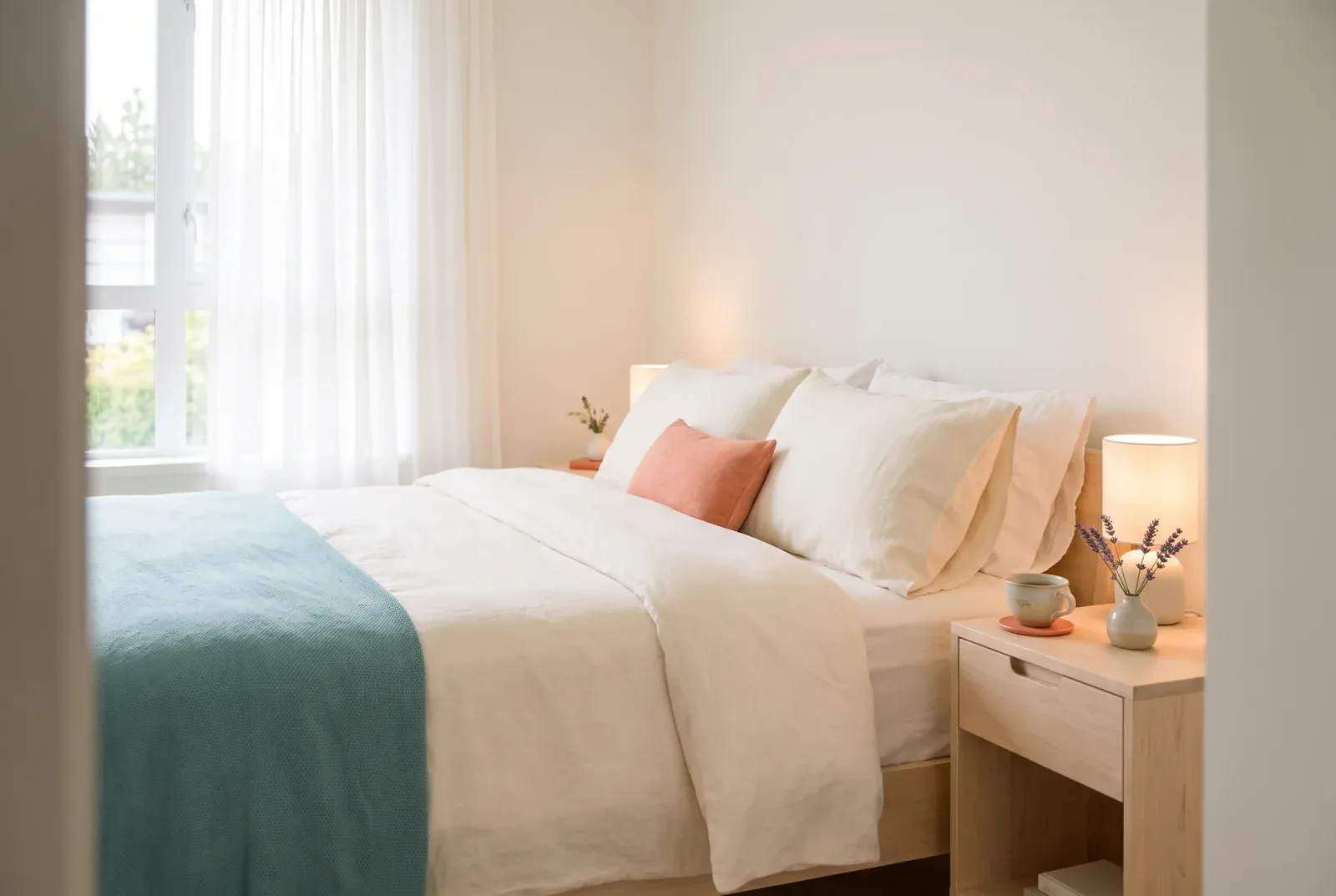
- Keep your bedroom cool, dark and quiet.
- If you can't sleep after about 20 minutes, get up and do something calm in dim light, then return.
- Get daylight in the morning. In a Vancouver winter this matters even more.
TCM adds: a warm, light evening meal eaten early, and winding down gradually.
What does research say?
Some systematic reviews suggest acupuncture may improve sleep quality compared with no treatment or some usual care, but study quality varies. CBT-I is recommended as a first-line treatment for chronic insomnia. Acupuncture can sit alongside it.
Relaxing options you can book now
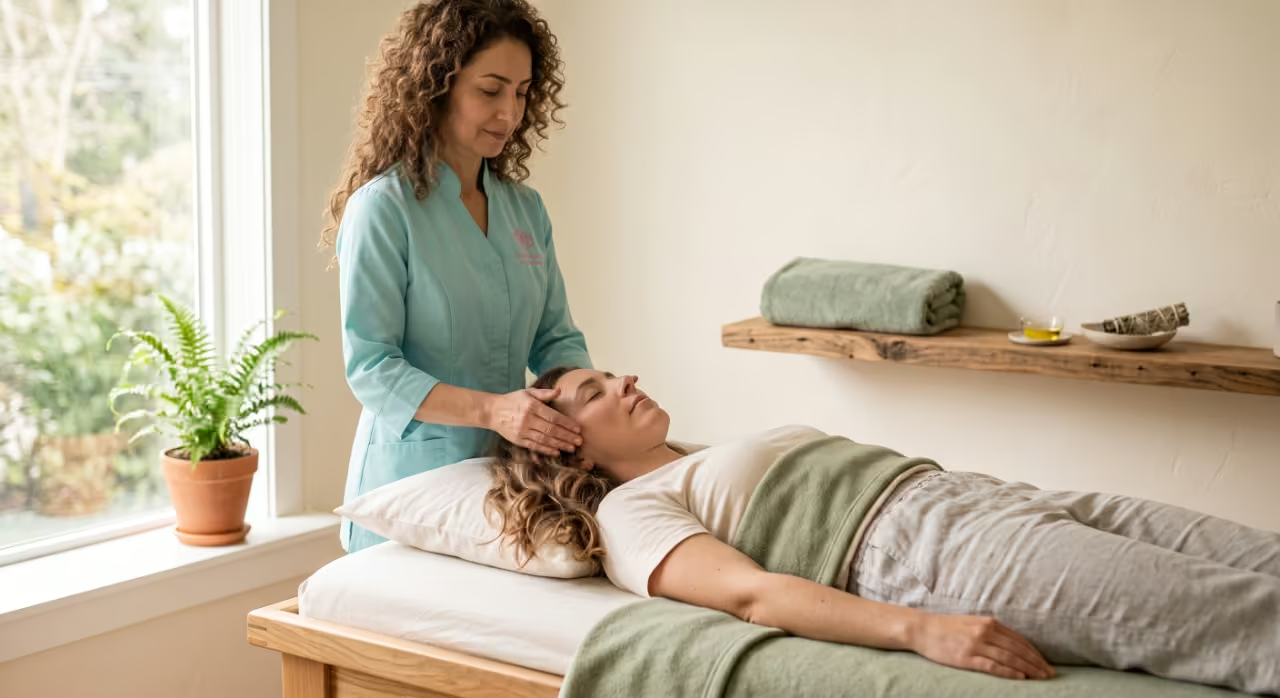
- Reiki with Gentle Massage: many people doze off.
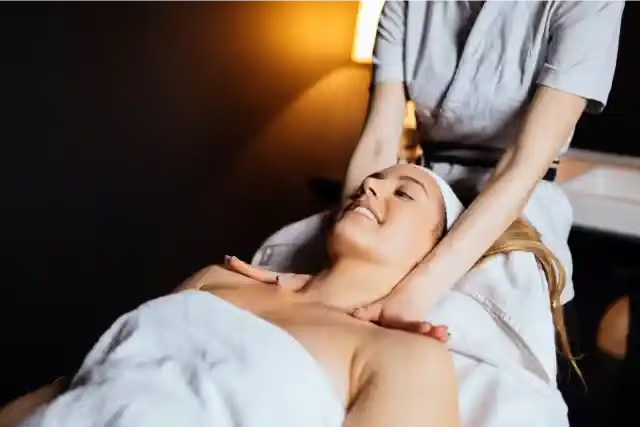
- Relaxation Massage: Tuesday evenings until 7pm and Wednesdays until 8pm suit a late wind-down.
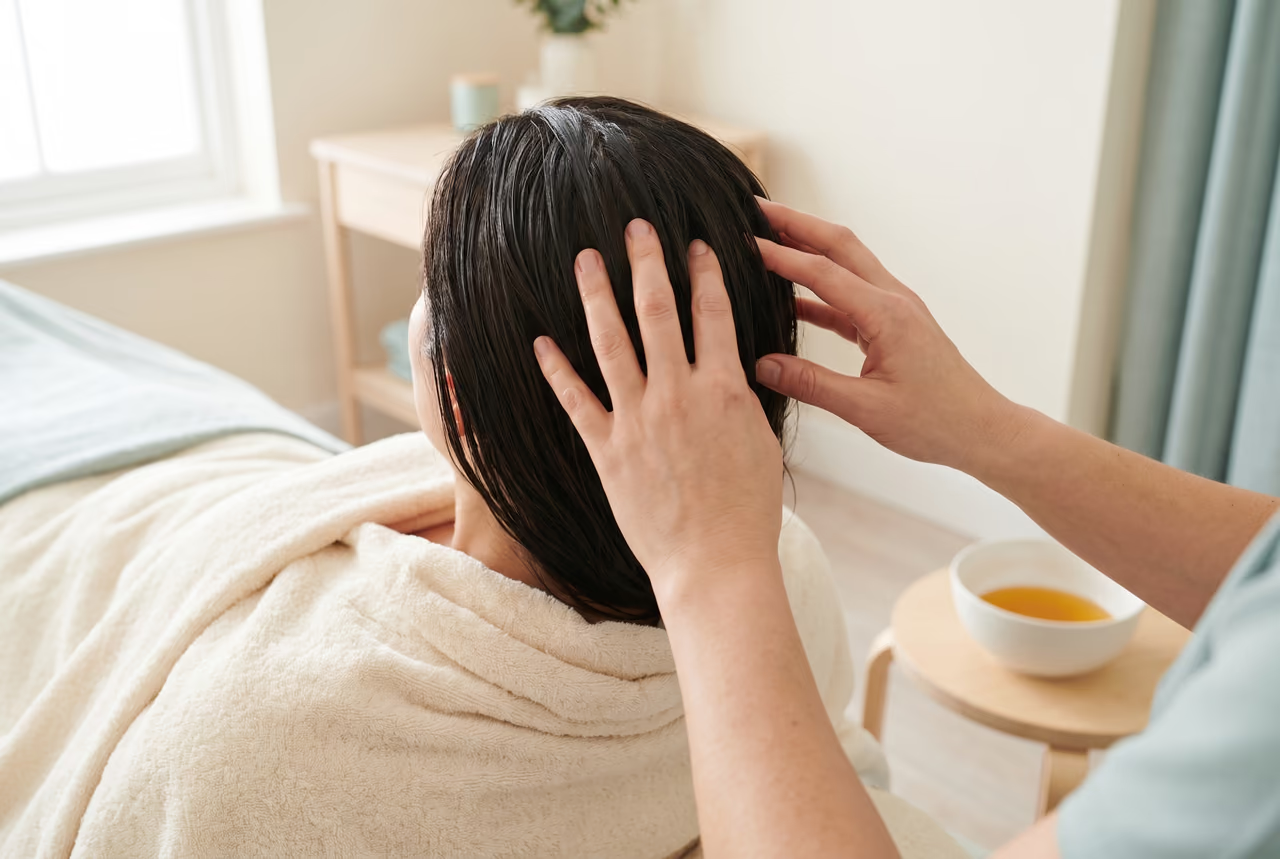
- Ayurvedic Indian Head Massage (waitlist): calming scalp, neck and shoulder massage.
- Acupuncture (waitlist).
When to see a doctor
See a doctor if you snore loudly, stop breathing or gasp in your sleep (possible sleep apnea); feel very sleepy during the day or while driving; have insomnia lasting months; or have poor sleep with low mood or anxiety. See sleep problems.
Where to book
Evening relaxation appointments are available at our Yaletown clinic, easy to reach from Downtown Vancouver and Richmond.
Frequently asked questions
Can acupuncture help insomnia?
Some research suggests it may improve sleep quality, though evidence quality varies.
Why do I wake at the same time every night?
TCM links waking times to organ systems; stress, alcohol and blood sugar also play a part.
When should I book to help sleep?
Late-afternoon or evening sessions suit many people.
Will I fall asleep during Reiki?
Many people do.
What is CBT-I?
A structured therapy for insomnia, often recommended first.
Sources
- Cheuk DK, et al. Acupuncture for insomnia. Cochrane Database Syst Rev. 2012. (pmc.ncbi.nlm.nih.gov)
- Qaseem A, et al. Management of Chronic Insomnia Disorder in Adults: A Clinical Practice Guideline From the American College of Physicians. Ann Intern Med. 2016. (pubmed.ncbi.nlm.nih.gov)
- NHLBI (NIH) — Insomnia (nhlbi.nih.gov)
- NHLBI (NIH) — Sleep Apnea: Symptoms (nhlbi.nih.gov)
Information on this site is general and isn't a substitute for advice from your physician.
Related to this article

Body Wellness
Acupuncture
Acupuncture is a Traditional Chinese Medicine treatment in which a registered acupuncturist places fine, sterile needles at specific points on the body. At Flourish TCM Clinic in Yaletown, Vancouver, a 45-minute session costs $170. Appointments open once a registered acupuncturist joins our team; join the waitlist.
Body Wellness
Reiki Healing with Gentle Massage
Reiki Healing with Gentle Massage is a 60-minute, fully clothed relaxation session that combines Reiki with soothing touch to the scalp, arms, hands and feet and a gentle gua sha facial. At Flourish TCM Clinic in Yaletown, Vancouver, it costs $170 with Lida Fazlinejad (Lida Fazli), certified Reiki practitioner.

Body Wellness
Relaxation Massage
Relaxation Massage is a calming, Swedish-style full-body massage using long, flowing strokes to help you unwind. At Flourish TCM Clinic in Yaletown, Vancouver, it's $170 for 60 minutes or $250 for two hours, with Amir Norouzi. It is a relaxation service, not registered massage therapy.

Body Wellness
Ayurvedic Indian Head Massage with Reiki
The Ayurvedic Indian Head Massage with Reiki is a relaxing treatment for the scalp, face, neck and shoulders, based on a traditional Indian head massage technique and infused with Reiki. It's offered by Lida Fazlinejad (Lida Fazli) at Flourish TCM Clinic in Yaletown. Appointments aren't open yet; join the waitlist.