What Happens in TCM Tongue and Pulse Diagnosis
Why a TCM practitioner looks at your tongue and feels your pulse, what they're noticing, and how it differs from a medical diagnosis.

 Written byFlourish TCM ClinicTraditional Chinese Medicine & skin care · Yaletown, Vancouver
 Reviewed byTabasom (Tabi) Mirshahi, R.Ac., R.TCM.P.
What Happens in TCM Tongue and Pulse Diagnosis
In a TCM assessment, your practitioner looks at your tongue (its colour, coating, shape and moisture) and feels your pulse at three positions on each wrist. Together with questions about sleep, digestion, energy and mood, these observations help identify your TCM pattern and guide treatment. It's a traditional assessment, not a replacement for medical diagnosis.
Why look at the tongue?
In TCM, the tongue is seen as a visible window into what's happening inside. Practitioners notice:
- Colour: pale, pink, red or purplish. A pale tongue might suggest deficiency; a red one, "heat."
- Coating: thin or thick, white or yellow. A thick coating is linked to "dampness."
- Shape: swollen, thin, cracked, or with teeth marks along the edges. Teeth marks are often linked to Spleen Qi deficiency.
- Moisture: dry or wet.
- Areas: different zones of the tongue are traditionally associated with different organ systems.
Tip before your appointment: avoid brushing your tongue, drinking coffee, or eating strongly coloured foods (like beets or turmeric) right beforehand. They can change its appearance.
What does the pulse reveal in TCM?
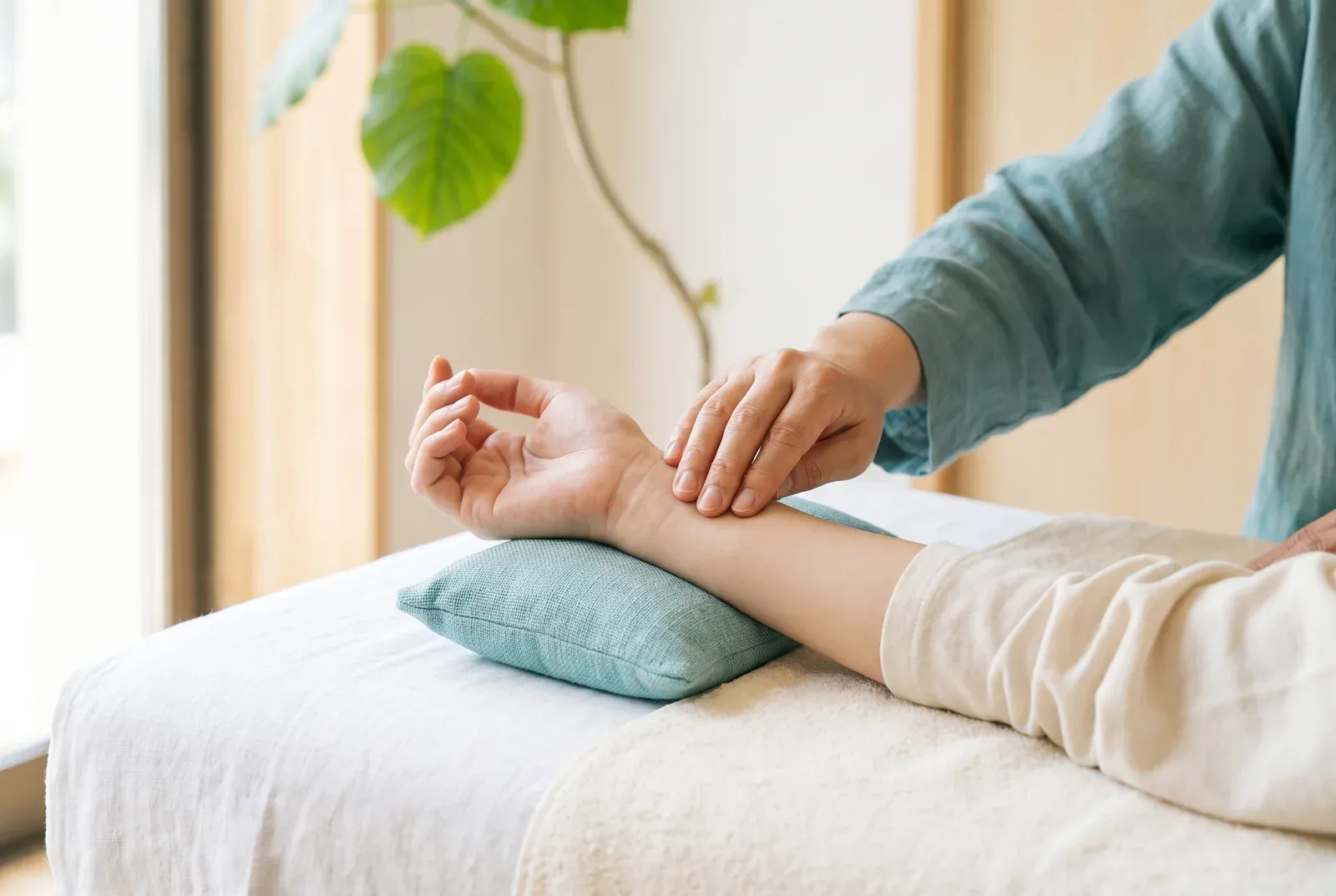
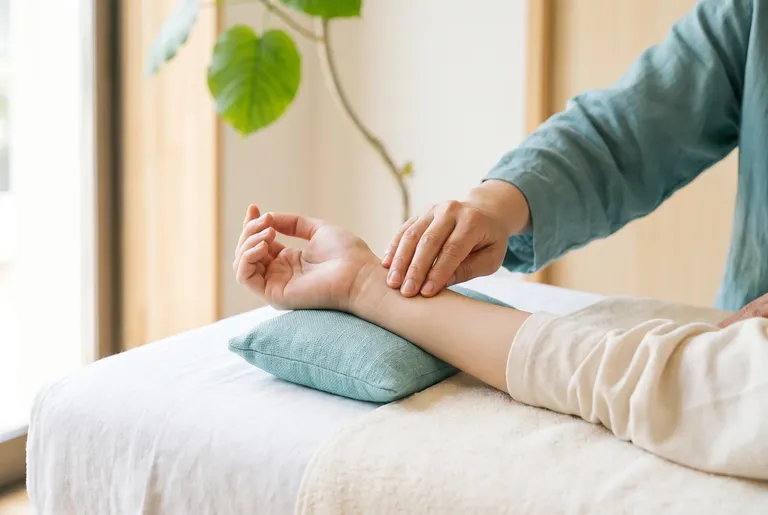
Your practitioner lightly rests three fingers on the inside of each wrist, over the radial artery, and feels at shallow, middle and deep pressure. TCM describes many pulse qualities (slippery, wiry, thin, weak, rapid, slow), each associated with patterns. Each of the three positions on each wrist is traditionally linked to particular organ systems.
This is different from a nurse taking your pulse rate. The TCM practitioner is feeling for quality as well as speed.
What other questions will you be asked?
TCM assessment is thorough. Expect questions about:
- your main concern: when it started, and what makes it better or worse;
- sleep, energy through the day, and when you feel strongest or most tired;
- appetite, digestion and bowel habits;
- feeling hot or cold, sweating, thirst;
- mood and stress;
- for women, the menstrual cycle;
- medical history and medications.
How does it differ from medical diagnosis?
TCM assessment identifies a TCM pattern, such as "Liver Qi stagnation with Spleen deficiency," which guides TCM treatment. It is not a Western medical diagnosis and doesn't replace tests or a doctor's assessment. A responsible practitioner will refer you to a doctor if your symptoms need medical investigation, such as unexplained weight loss, blood in stool or a new lump.
How is it used in your treatment?
Your pattern guides which acupuncture points, bodywork or advice your practitioner chooses. Two people with bloating, for example, might have different patterns and receive different treatment. Tongue and pulse are rechecked over a course of treatment as a way of tracking change.
Experience a TCM assessment
TCM assessment is part of every acupuncture visit with a registered practitioner. Acupuncture is currently on the waitlist. Our clinic is in Yaletown, a short SkyTrain ride from Burnaby and close to Chinatown.
Frequently asked questions
Should I brush my tongue before a TCM visit?
It's better to skip it that morning.
Can tongue diagnosis detect disease?
No. It's a TCM assessment, not a medical test.
Does pulse diagnosis hurt?
No. It's a light touch at the wrist.
Why so many questions about sleep and digestion?
TCM looks at the whole person to find your pattern.
Will my tongue change with treatment?
Practitioners often track changes over a course.
Sources
- Anastasi JK, et al. Understanding diagnostic reasoning in TCM practice: tongue diagnosis. Altern Ther Health Med. 2009. (pubmed.ncbi.nlm.nih.gov)
- Bilton K, Smith NJ. Reliability of manual pulse diagnosis methods in traditional East Asian medicine: a systematic narrative literature review. J Altern Complement Med. 2016. (pubmed.ncbi.nlm.nih.gov)
- Schnyer R, et al. J Altern Complement Med. 2019 (randomized controlled trial). (pmc.ncbi.nlm.nih.gov)
- National Center for Complementary and Integrative Health (NIH) — Traditional Chinese Medicine: What You Need To Know (nccih.nih.gov)
Information on this site is general and isn't a substitute for advice from your physician.
Related to this article
Body Wellness
Acupuncture
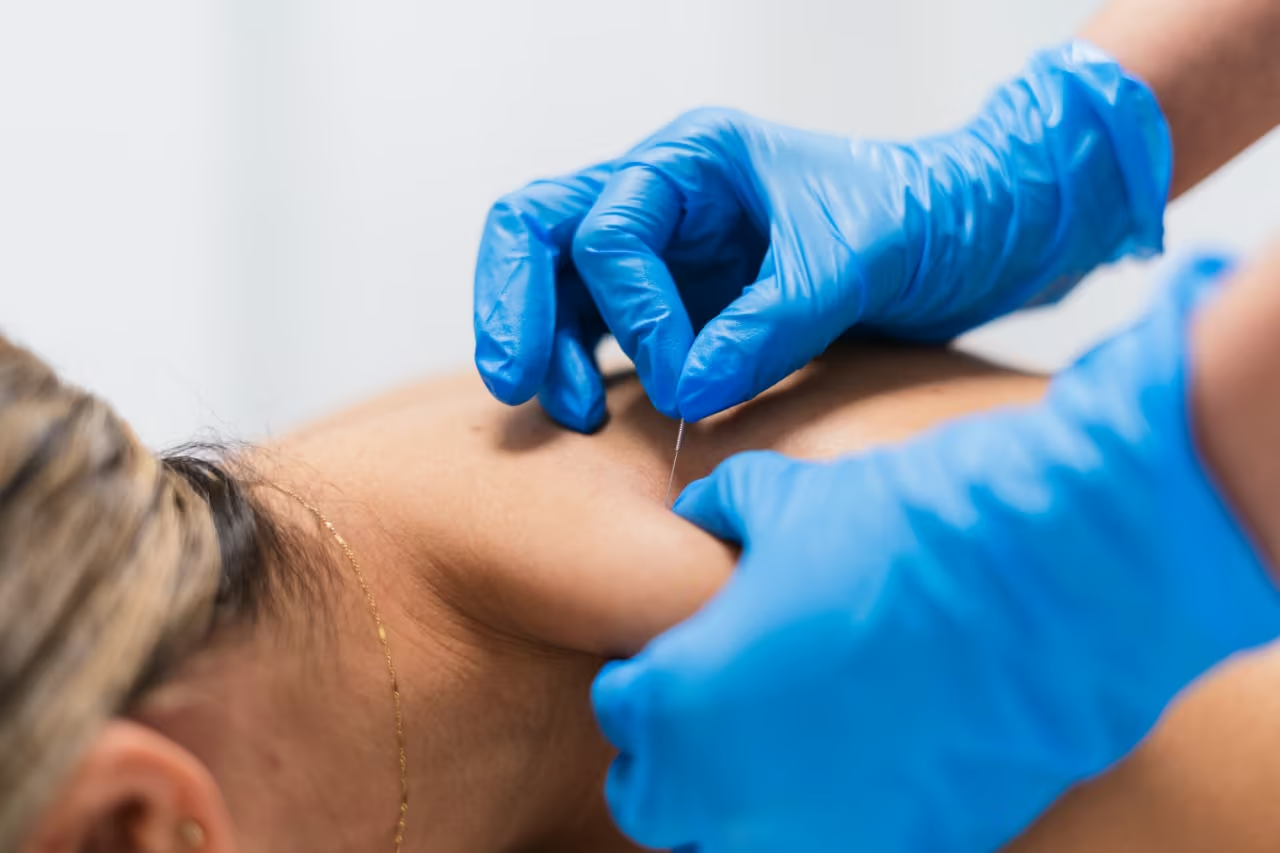
Acupuncture is a Traditional Chinese Medicine treatment in which a registered acupuncturist places fine, sterile needles at specific points on the body. At Flourish TCM Clinic in Yaletown, Vancouver, a 45-minute session costs $170. Appointments open once a registered acupuncturist joins our team; join the waitlist.
Body Wellness
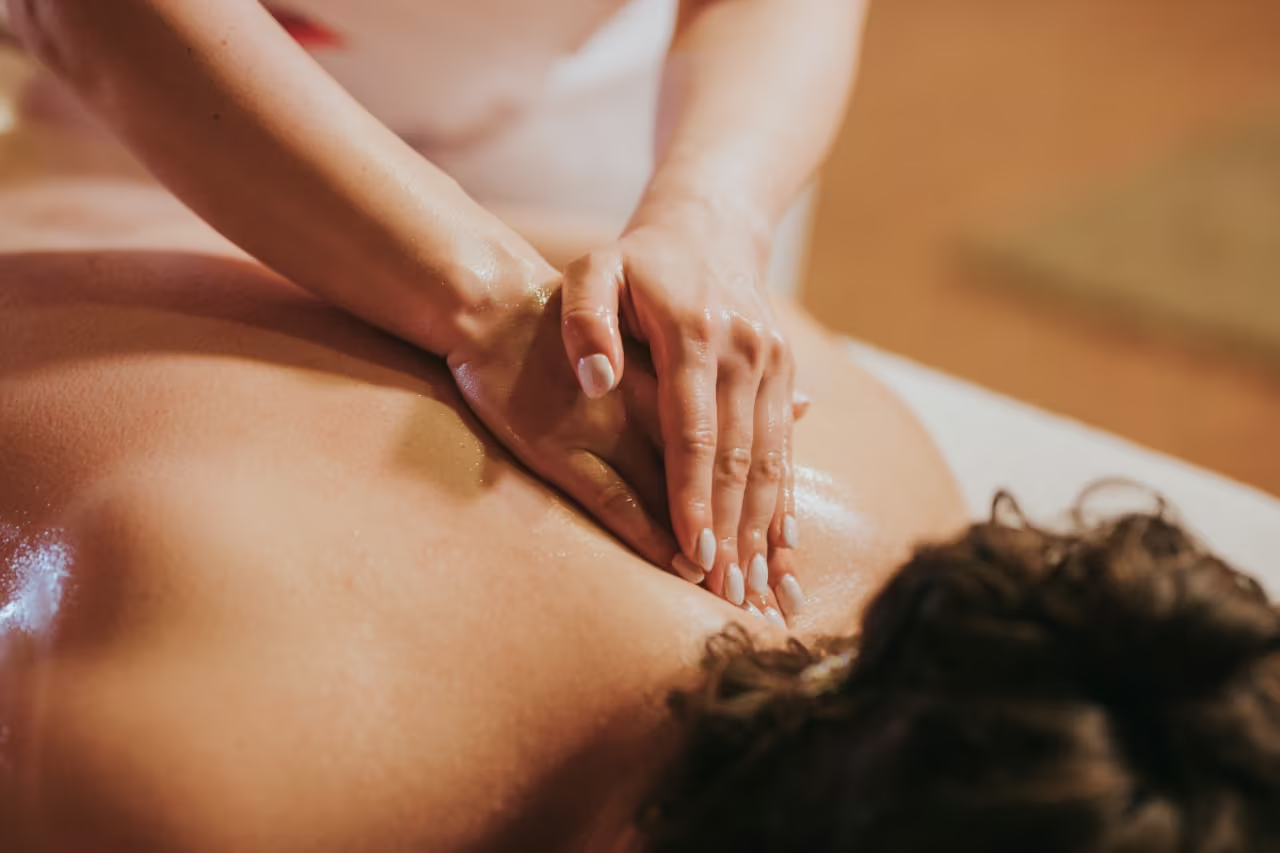
TuiNa & DDS Acupressure Massage
TuiNa & DDS Acupressure Massage combines TuiNa, a Chinese massage technique that works along the meridians and acupressure points, with the DDS bio-current system's gentle micro-current. At Flourish TCM Clinic in Yaletown, Vancouver, it's $110 for 30 minutes or $170 for 60 minutes, with Amir Norouzi.