Qi and Meridians Explained Without the Jargon
What TCM means by Qi and meridians, how practitioners use them to choose treatment, and how Western science views these ideas.

 Written byFlourish TCM ClinicTraditional Chinese Medicine & skin care · Yaletown, Vancouver
 Reviewed byTabasom (Tabi) Mirshahi, R.Ac., R.TCM.P.
Qi and Meridians Explained Without the Jargon
In Traditional Chinese Medicine, Qi is the vital energy understood to flow through the body, and meridians are the channels it's said to travel along, connecting the body's surface to its internal organ systems. TCM practitioners use these ideas to choose acupuncture points and bodywork. They're concepts within TCM's own framework rather than structures measured by Western science.
What is Qi?
Qi (pronounced "chee") is often translated as "vital energy" or "life force." In TCM, it's what animates the body: it warms you, moves blood, supports digestion, protects against illness, and holds organs in place. Health, in TCM terms, means Qi that is plentiful and flowing smoothly.
TCM describes two broad kinds of Qi problems:
- Stagnation: Qi isn't flowing freely, linked to pain, tension, irritability or bloating. ("Where there's blockage, there's pain.")
- Deficiency: there isn't enough Qi, linked to tiredness, weak digestion, feeling cold and catching colds easily. See Low Energy and Burnout: What TCM Calls Qi Deficiency.
What are meridians?
Meridians are the pathways TCM maps for Qi and blood. There are 12 main meridians, each associated with an organ system (Lung, Large Intestine, Stomach, Spleen, Heart, and so on), plus additional vessels. They run in lines along the arms, legs, torso and head. Acupoints, the points used in acupuncture and acupressure, lie along them.
A TCM organ "system" is broader than the anatomical organ. The Spleen system, for example, covers digestion and the transformation of food and fluids in TCM thinking.
How do practitioners use Qi and meridians?
Practitioners use these ideas as a map for choosing treatment:
- Pain along a channel. Pain down the outside of the leg might be treated with points along the Gallbladder meridian, including points far from the painful area.
- Pattern-based points. Tiredness with poor appetite might point to Spleen Qi deficiency, so points that "strengthen" the Spleen are chosen.
- Bodywork. TuiNa massage follows meridian lines, and cupping is used to move stagnation.
How does Western science view Qi and meridians?
Qi and meridians haven't been identified as physical structures, like nerves or blood vessels, in anatomical studies. Researchers exploring acupuncture's effects have looked at nerves, connective tissue (fascia) and the nervous system's pain and stress pathways. Some acupoints lie near nerve bundles or muscle junctions, but that doesn't equal a meridian.
We think the honest position is this: Qi and meridians are a traditional framework that guides how TCM practitioners assess and treat people. They're useful within that framework. Research into acupuncture measures its effects without needing to prove the framework itself.
Why does the framework still guide care?
It gives practitioners a consistent, whole-person way to connect symptoms that Western medicine might treat separately, such as poor sleep, low energy, digestive discomfort and irritability. That wide view is one reason people seek out TCM. Read What Is Traditional Chinese Medicine? for the bigger picture.
Experiencing it for yourself
The easiest way to understand meridian-based care is to feel it. TuiNa & DDS Acupressure Massage works along the meridians by hand and is bookable now at our Yaletown clinic, a short trip from Olympic Village and False Creek. Acupuncture is currently on the waitlist.
Frequently asked questions
How many meridians are there?
TCM maps 12 main meridians plus extra vessels.
Can I feel my Qi?
Some people describe warmth, tingling or heaviness during treatment, which TCM relates to Qi.
Are meridians real?
They aren't anatomical structures; they're a traditional framework used to guide care.
Do I need to believe in Qi for acupuncture to help?
No. Studies measure acupuncture's effects independently of belief.
Which treatment works on meridians without needles?
TuiNa massage and acupressure.
Sources
- Langevin HM, Yandow JA. Relationship of acupuncture points and meridians to connective tissue planes. Anat Rec. 2002. (pubmed.ncbi.nlm.nih.gov)
- Zhao ZQ. Neural mechanism underlying acupuncture analgesia. Prog Neurobiol. 2008. (pubmed.ncbi.nlm.nih.gov)
- National Center for Complementary and Integrative Health (NIH) — Acupuncture: Effectiveness and Safety (nccih.nih.gov)
- Vickers AJ, et al. Acupuncture for chronic pain: update of an individual patient data meta-analysis. J Pain. 2018. (pmc.ncbi.nlm.nih.gov)
Information on this site is general and isn't a substitute for advice from your physician.
Related to this article

Body Wellness
Acupuncture
Acupuncture is a Traditional Chinese Medicine treatment in which a registered acupuncturist places fine, sterile needles at specific points on the body. At Flourish TCM Clinic in Yaletown, Vancouver, a 45-minute session costs $170. Appointments open once a registered acupuncturist joins our team; join the waitlist.
Body Wellness
TuiNa & DDS Acupressure Massage
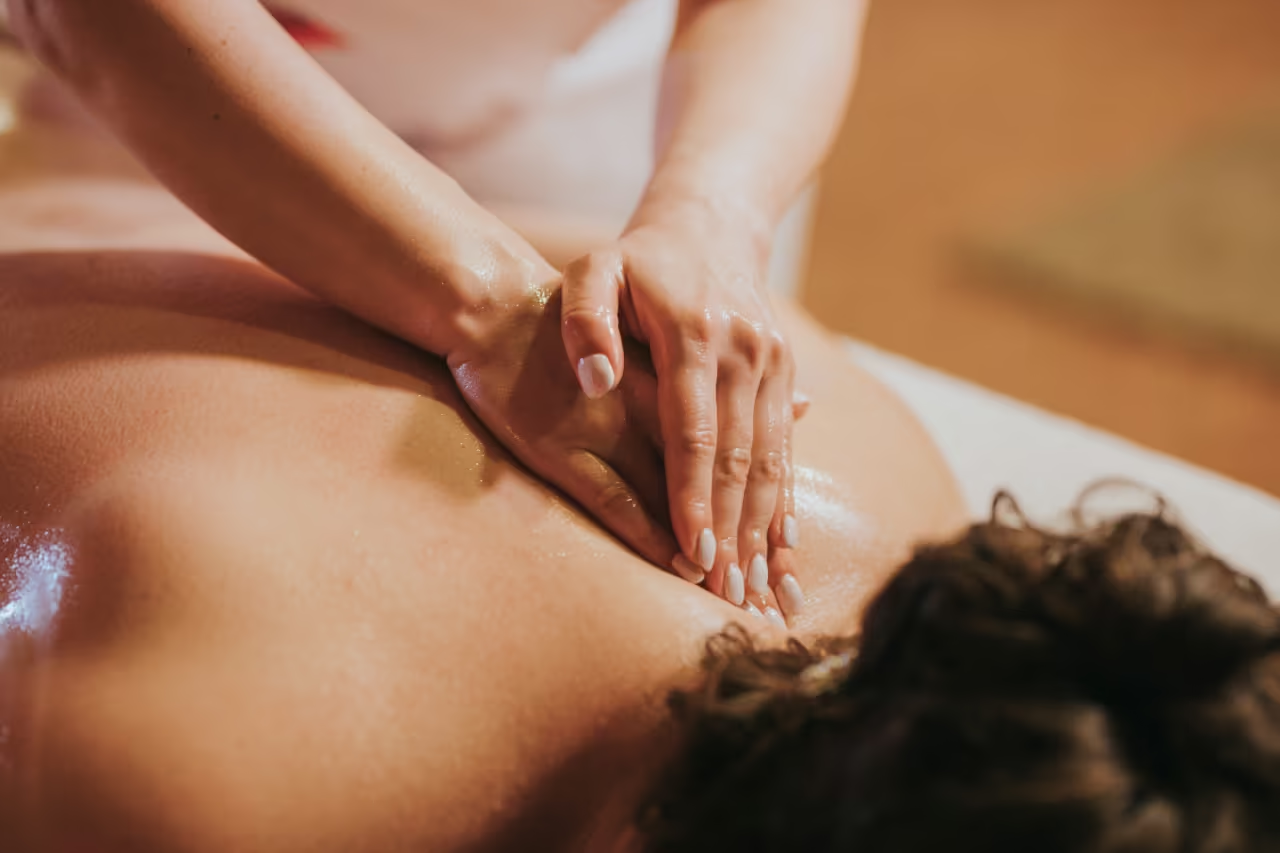
TuiNa & DDS Acupressure Massage combines TuiNa, a Chinese massage technique that works along the meridians and acupressure points, with the DDS bio-current system's gentle micro-current. At Flourish TCM Clinic in Yaletown, Vancouver, it's $110 for 30 minutes or $170 for 60 minutes, with Amir Norouzi.

Body Wellness
Cupping Therapy
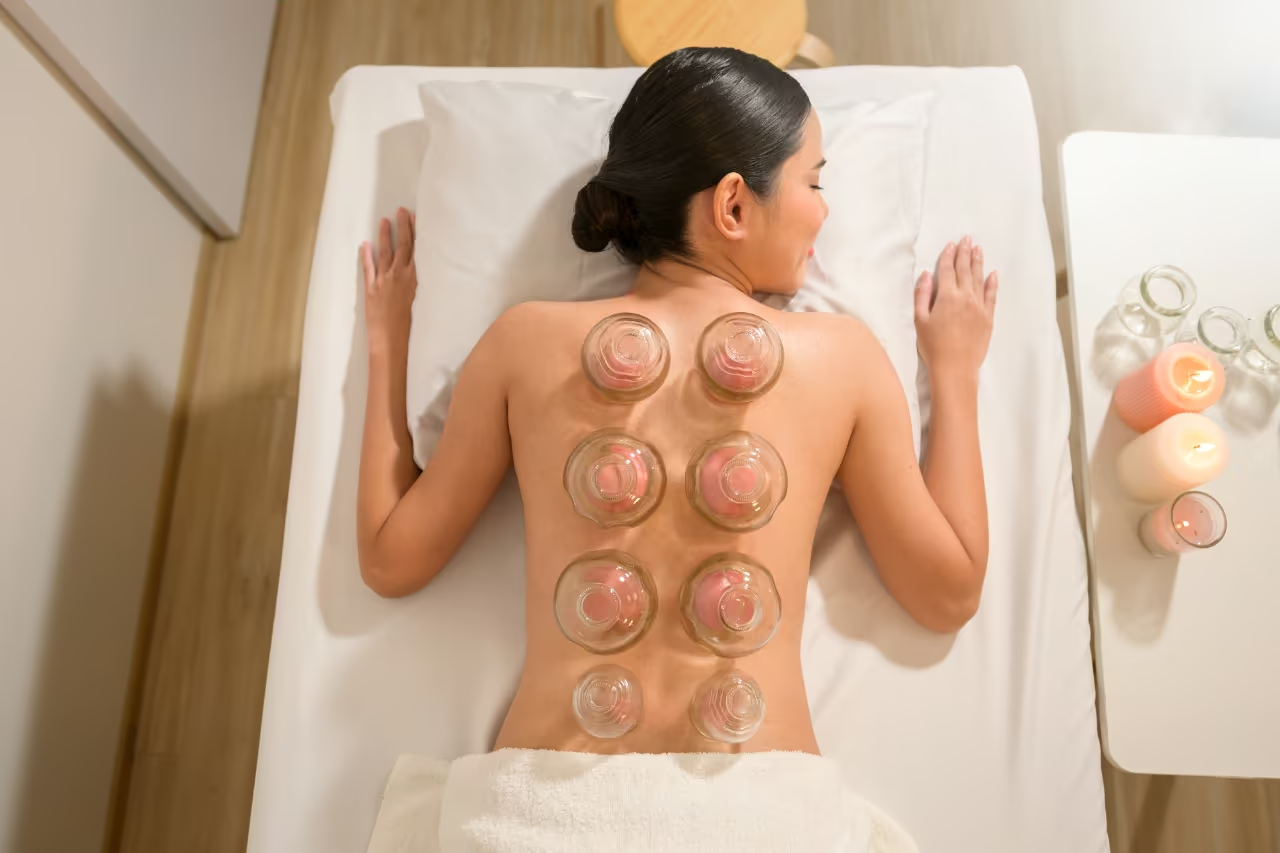
Cupping Therapy is a 30-minute Traditional Chinese Medicine treatment in which vacuum cups are applied over massage oil, to ease muscle tension and help you relax. At Flourish TCM Clinic in Yaletown, Vancouver, it costs $170. Appointments open once a registered acupuncturist joins our team.