Period Pain and PMS: A TCM Perspective
What's common and what isn't, how TCM understands cramps and PMS, warmth and bodywork options, what research says, and endometriosis red flags.

 Written byFlourish TCM ClinicTraditional Chinese Medicine & skin care · Yaletown, Vancouver
 Reviewed byTabasom (Tabi) Mirshahi, R.Ac., R.TCM.P.
Period Pain and PMS: A TCM Perspective
Period pain and PMS, meaning cramps, bloating, breast tenderness, mood changes and fatigue before or during a period, are very common. TCM links them to stagnation of Qi and blood, cold, or deficiency, and uses acupuncture, warmth and lifestyle advice timed with your cycle. Some research suggests acupuncture may help period pain. Severe pain isn't something you just have to live with.
What's common, and what isn't?
Common: cramping in the lower belly or back for a day or two, mild bloating, breast tenderness, irritability or low mood before a period.
Not something to just live with:
- pain that stops you working, studying or sleeping;
- pain that's getting worse over the years;
- very heavy bleeding (soaking a pad or tampon every hour);
- bleeding between periods or after sex;
- pain during sex.
These can be signs of endometriosis, fibroids or other conditions. See a doctor.
How does TCM understand cramps and PMS?
TCM looks at the pattern:
- Qi and blood stagnation: cramping, dark clots, pain relieved once flow starts.
- Cold in the uterus: cramping eased by warmth, feeling cold.
- Deficiency: a dull ache, tiredness, lighter flow.
- Liver Qi stagnation: irritability, breast tenderness and bloating before a period, often worse with stress.
Care is often timed through the cycle: before the period, during, and after.
Warmth and bodywork options
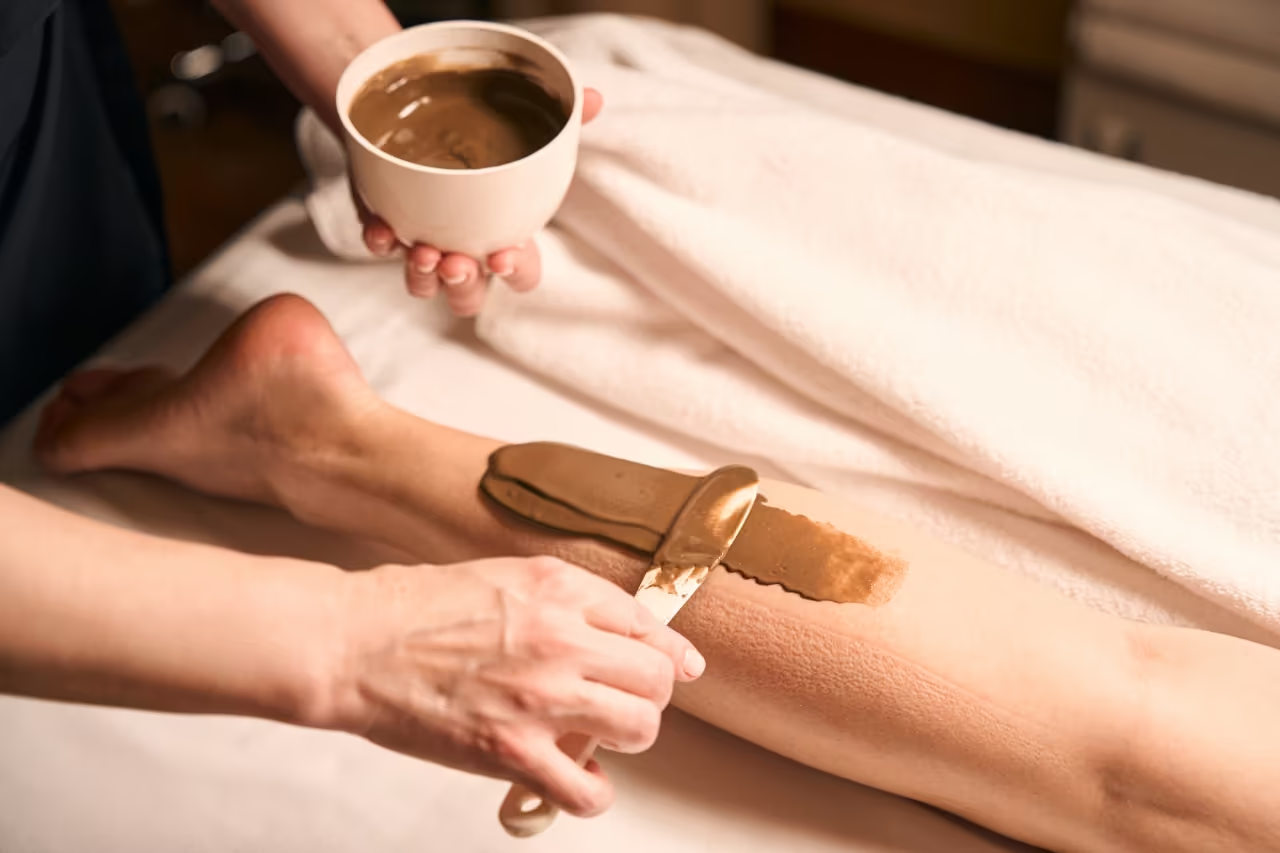
- Chinese Medicine Mud Therapy (bookable): sustained warmth, used in TCM for "cold" patterns.
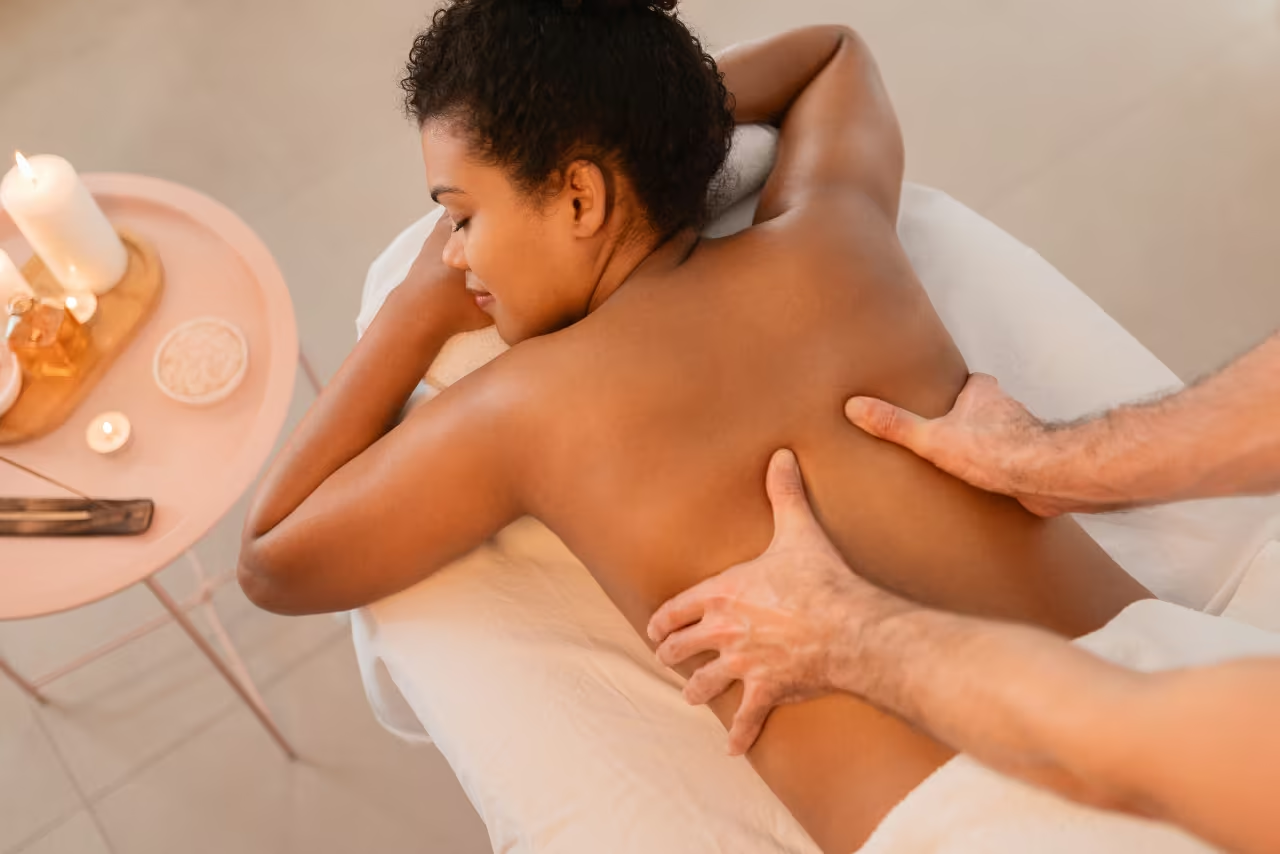
- Lymphatic Drainage Massage (bookable): for pre-period bloating and heaviness.
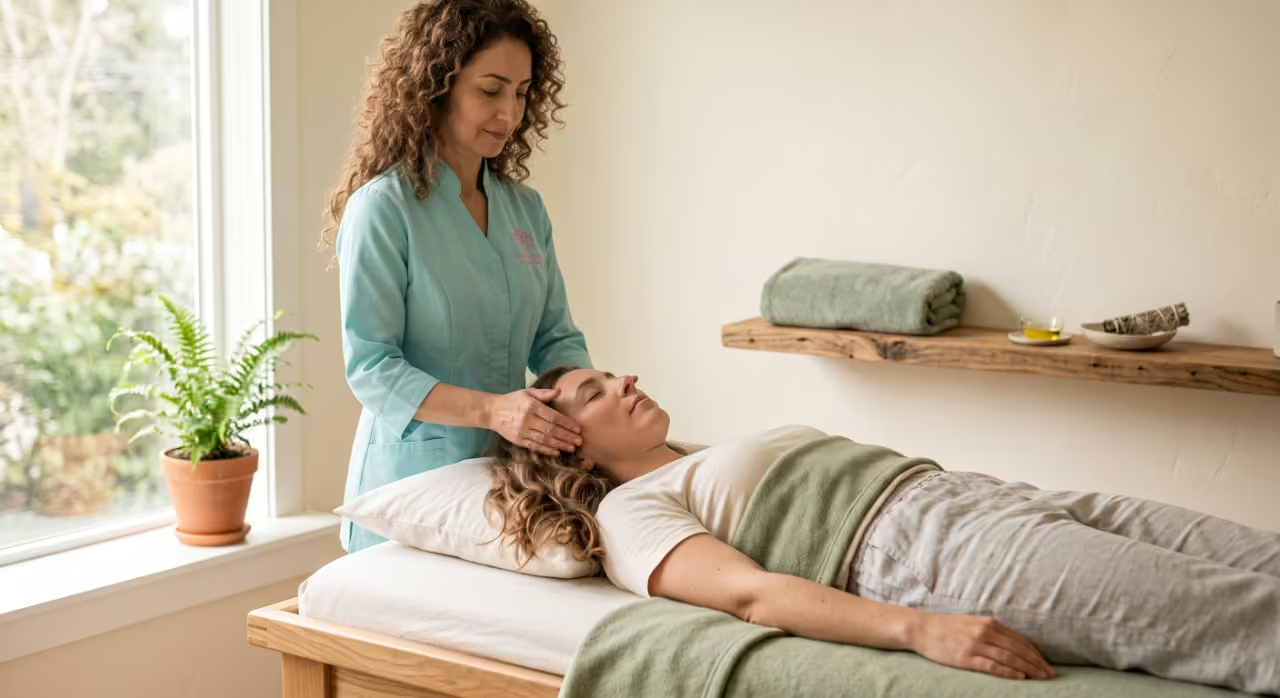
- Reiki or Relaxation Massage (bookable): for stress and PMS-related tension.
- Acupuncture (waitlist): TCM's main approach to cycle-related discomfort.
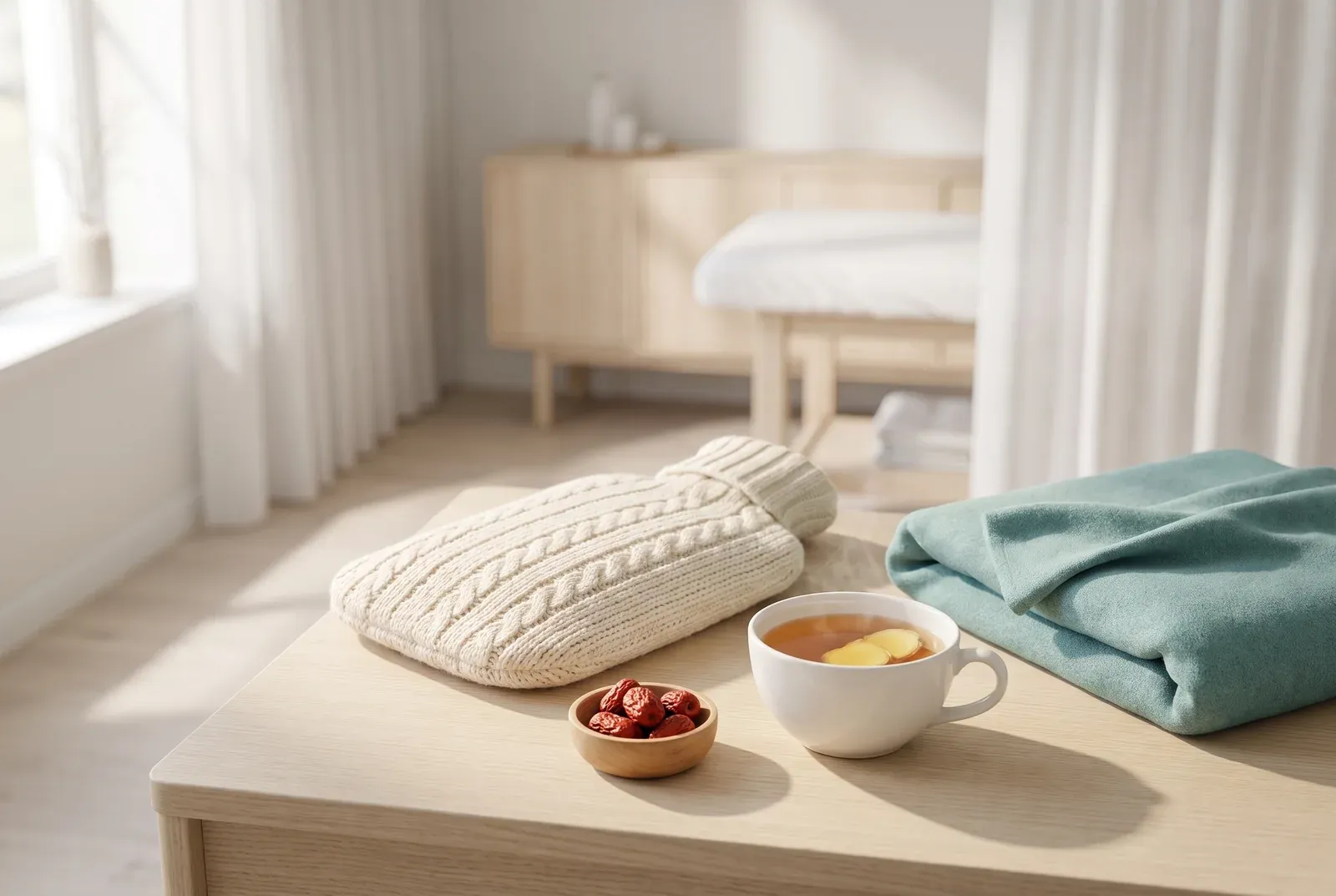
At home, a warm compress or hot water bottle on the lower belly is a simple, time-honoured comfort.
What does research say?
Cochrane and other systematic reviews suggest acupuncture and acupressure may reduce period pain for some people, though study quality is often low and more rigorous research is needed. Acupuncture is typically used alongside, not instead of, medical care such as pain relievers or hormonal options your doctor may suggest.
Everyday TCM advice
- Keep your lower back and belly warm, especially before your period.
- Favour warm, cooked meals over cold and raw food around your period.
- Gentle movement, such as walking or yoga, rather than intense training if you feel depleted.
- Manage stress, which TCM strongly links to PMS.
When to see a doctor
See a doctor for the "not something to live with" signs above, or for periods that suddenly change. More on our menstrual discomfort and PMS page.
Where to book
Warmth, lymphatic and relaxation treatments are bookable at our Yaletown clinic, close to Chinatown and Gastown. Acupuncture is on the waitlist.
Frequently asked questions
Can acupuncture help period pain?
Some research suggests it may, though evidence quality varies.
When should I book in my cycle?
Warmth treatments are often booked just before your period; a practitioner times acupuncture to your cycle.
Is heat good for cramps?
Many people find warmth comforting, and TCM uses it for "cold" patterns.
Could my pain be endometriosis?
Severe, worsening pain, or pain with sex, should be checked by a doctor.
Can I book acupuncture now?
It's on a waitlist.
Sources
- Smith CA, et al. Acupuncture for dysmenorrhoea. Cochrane Database Syst Rev. 2016. (pubmed.ncbi.nlm.nih.gov)
- Li X, et al. Efficacy of non-pharmacological interventions for primary dysmenorrhoea: a systematic review and Bayesian network meta-analysis. BMJ Evid Based Med. 2024. (pubmed.ncbi.nlm.nih.gov)
- NHS — Period pain (nhs.uk)
Information on this site is general and isn't a substitute for advice from your physician.
Related to this article
Body Wellness
Acupuncture
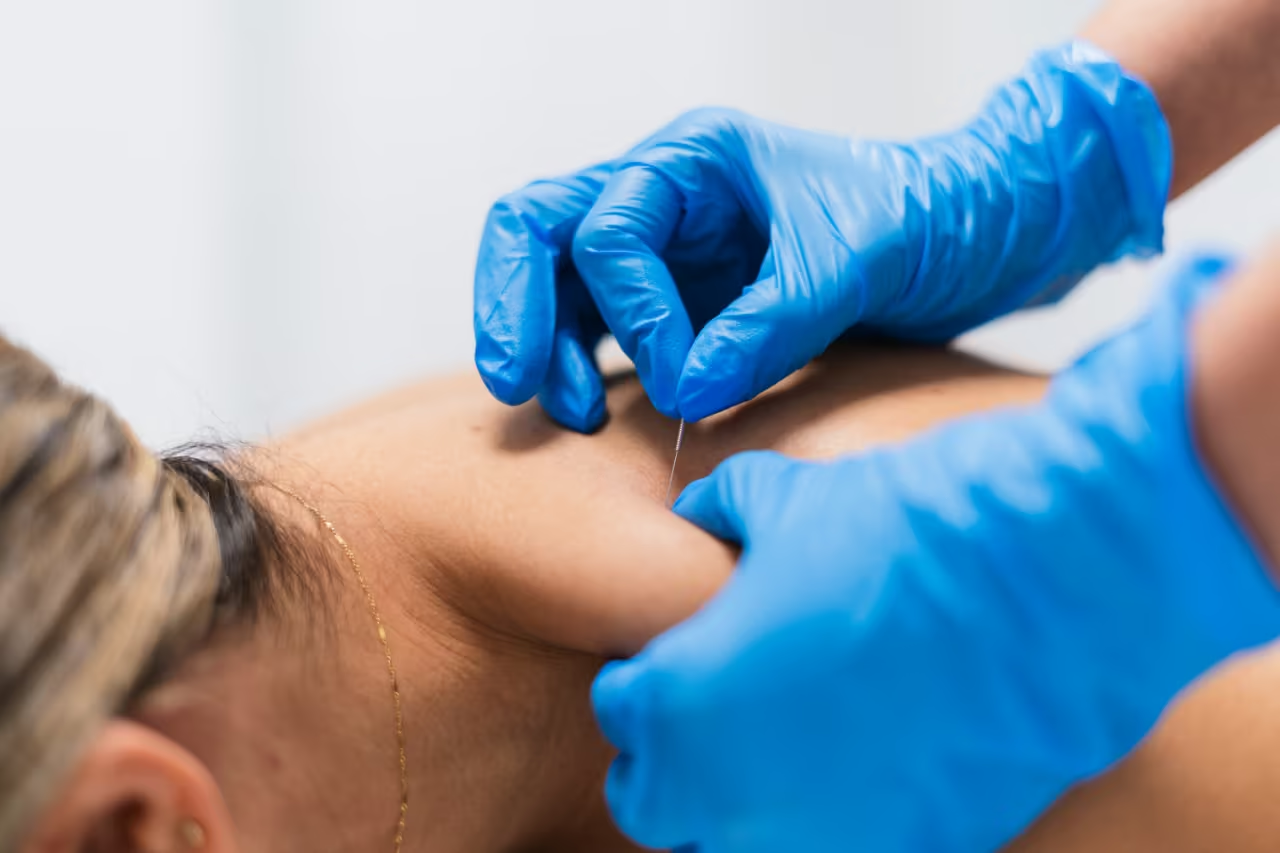
Acupuncture is a Traditional Chinese Medicine treatment in which a registered acupuncturist places fine, sterile needles at specific points on the body. At Flourish TCM Clinic in Yaletown, Vancouver, a 45-minute session costs $170. Appointments open once a registered acupuncturist joins our team; join the waitlist.
Body Wellness
Chinese Medicine Mud Therapy
Chinese Medicine Mud Therapy applies a warm mineral mud, at body temperature, to areas of the body such as the back, shoulders or joints. At Flourish TCM Clinic in Yaletown, Vancouver, it's $150 for 30 minutes, or $260 for 90 minutes combined with DDS acupressure massage, with Amir Norouzi or Mehri Abedi.


Body Wellness
Lymphatic Drainage Massage
Lymphatic Drainage Massage is a gentle, rhythmic massage that uses directional strokes to support the flow of lymph fluid. People book it for swelling, puffiness and recovery after surgery, with their surgeon's clearance. At Flourish TCM Clinic in Yaletown, Vancouver, it's $170 for 60 minutes.
Body Wellness
Reiki Healing with Gentle Massage
Reiki Healing with Gentle Massage is a 60-minute, fully clothed relaxation session that combines Reiki with soothing touch to the scalp, arms, hands and feet and a gentle gua sha facial. At Flourish TCM Clinic in Yaletown, Vancouver, it costs $170 with Lida Fazlinejad (Lida Fazli), certified Reiki practitioner.