Low-Level Laser for Pain: What It Is and What Research Says
Low-level (cold) laser uses gentle light that doesn't heat or cut. How it's used for pain, what studies show, what a session is like, and safety.

 Written byFlourish TCM ClinicTraditional Chinese Medicine & skin care · Yaletown, Vancouver
 Reviewed byTabasom (Tabi) Mirshahi, R.TCM.P., R.Ac.
Low-Level Laser for Pain: What It Is and What Research Says
Low-level laser therapy, also called cold laser or photobiomodulation, uses low-intensity light that doesn't heat or cut the skin. It's been studied for musculoskeletal pain such as joint and neck pain, with mixed but promising results that depend on the condition, dose and device. Most people feel nothing during treatment, which makes it a gentle, needle-free option.
What is low-level laser?
Low-level laser therapy uses red or near-infrared light at low power. Unlike surgical or cosmetic lasers, it isn't meant to heat, cut or resurface tissue. The idea behind it is photobiomodulation: light energy absorbed by cells may influence processes involved in inflammation and tissue repair. See our low-level laser technology page.
How is it used for pain?
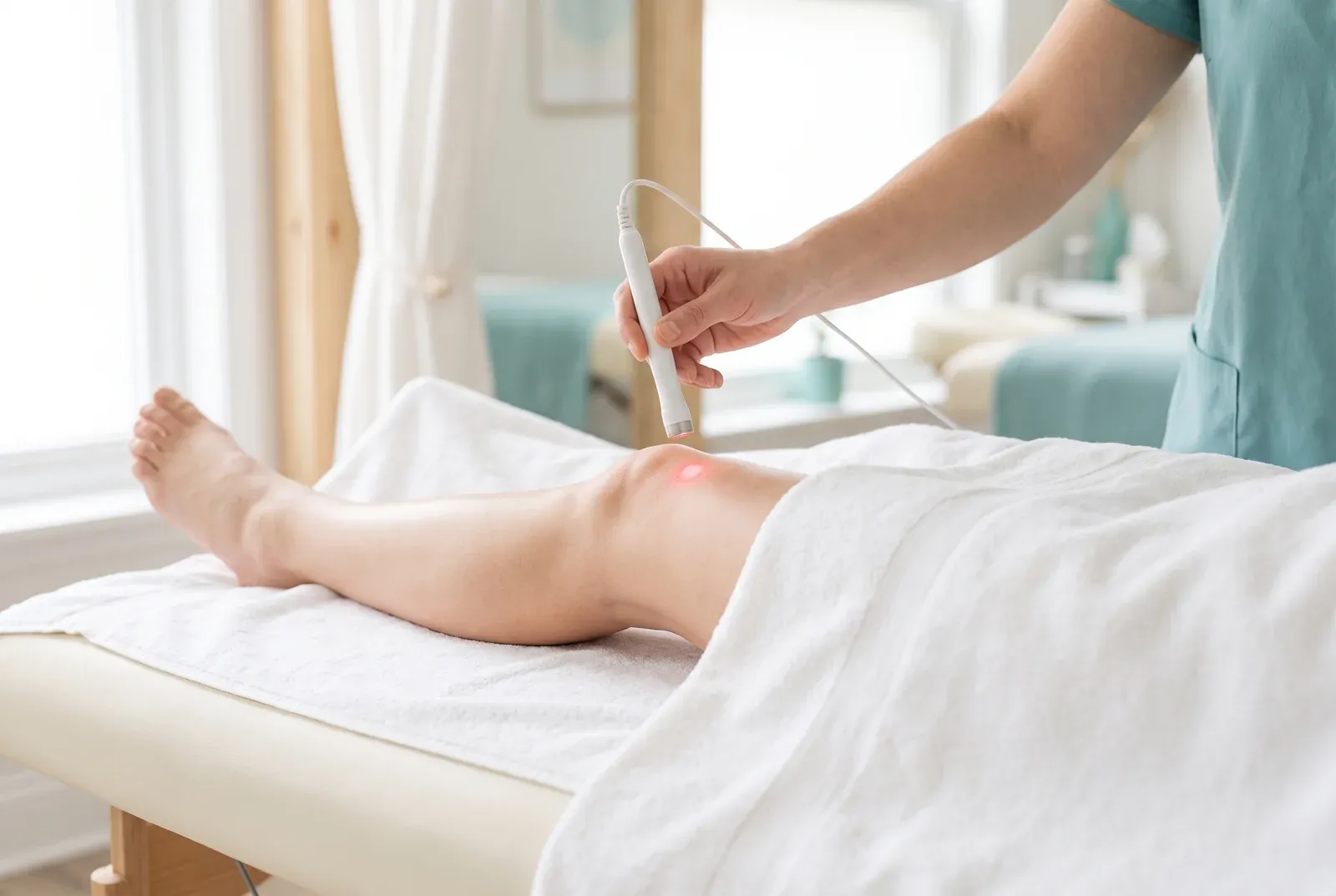
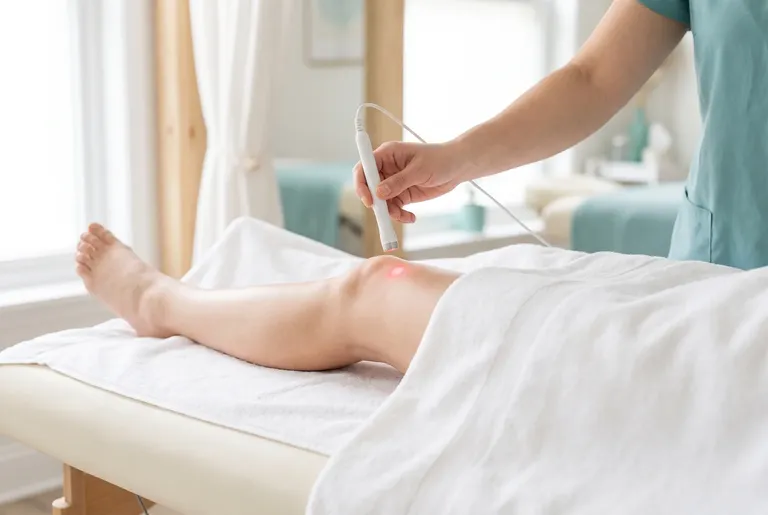
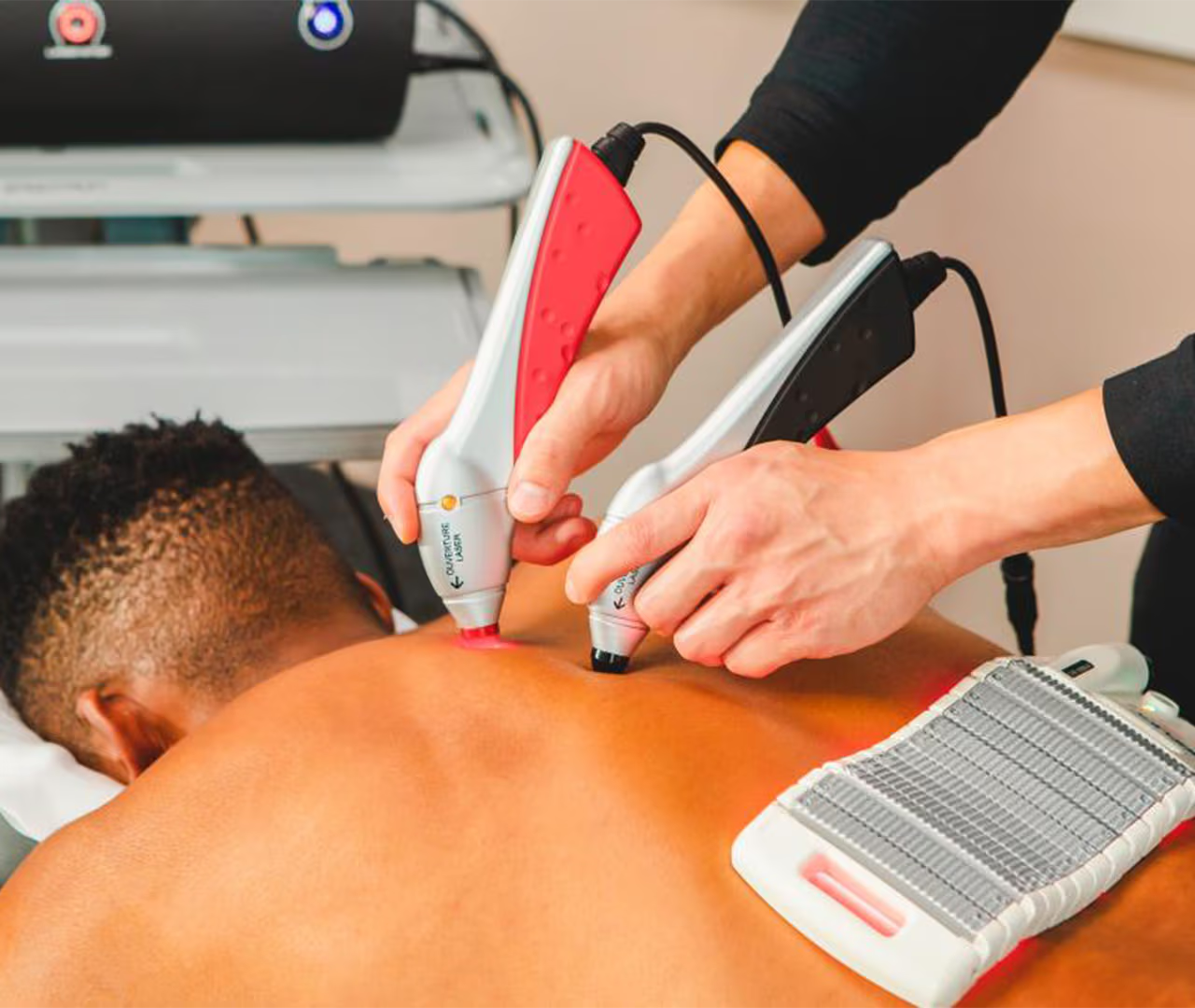
A handheld probe is held over the painful area, or over chosen points, for a short time. When the points used are acupuncture points, it's often called laser acupuncture. Sessions are short, and most people feel nothing or only mild warmth.
What does research show, and not show?
Low-level laser has been studied for conditions such as neck pain, knee osteoarthritis, tendinopathies and low back pain. Some systematic reviews report short-term pain improvements for certain conditions, especially when dosing follows recommended parameters. Others find the evidence low-quality or inconsistent. Results vary a lot with the device, wavelength, dose and condition.
Our honest summary: it's a low-risk, needle-free option that may help some people with some types of musculoskeletal pain. It won't help everyone, and it doesn't replace assessment by a doctor or physiotherapist for injuries.
What is a session like?
- A conversation about your pain: where it is, how long you've had it, and what makes it worse.
- Protective eyewear goes on.
- The probe is held over each area or point for seconds to minutes.
- Most people feel nothing, or gentle warmth.
- No downtime afterwards.
Who shouldn't have it?
Your eyes are always covered, and the laser is never pointed at them. It isn't used directly over a tumour or cancer, on the abdomen or lower back during pregnancy, or over an infected area, a blood clot or bleeding, or over areas treated with light-sensitising medication. Tell your practitioner about any health conditions.
Laser at Flourish
At Flourish, low-level laser is offered as Laser Acupoint Therapy, given on points by trained therapists, and as DDS + Laser Acupoint Therapy, which pairs it with Bio-Current massage. These are laser services, not acupuncture, and no insurance receipts are issued for them. You can also book TuiNa & DDS Acupressure Massage or warm Chinese Medicine Mud Therapy for joint stiffness and back pain. Needle acupuncture is on the waitlist. Our clinic is in Yaletown, close to the West End and False Creek.
Frequently asked questions
Is cold laser safe?
It's considered low-risk; protective eyewear is used.
How many sessions are needed?
Studies often use several sessions; your practitioner will advise.
Can laser help arthritis?
Some studies suggest short-term pain relief for knee osteoarthritis; results vary.
Does it hurt?
Most people feel nothing, or slight warmth.
Is it the same as laser hair removal?
No. Those lasers use far higher power to heat tissue.
Sources
- Stausholm MB, et al. Efficacy of low-level laser therapy on pain and disability in knee osteoarthritis: systematic review and meta-analysis of randomised placebo-controlled trials. BMJ Open. 2019. (pmc.ncbi.nlm.nih.gov)
- Yousefi-Nooraie R, et al. Low level laser therapy for nonspecific low-back pain. Cochrane Database Syst Rev. 2008. (pmc.ncbi.nlm.nih.gov)
- Chow RT, et al. Efficacy of low-level laser therapy in the management of neck pain: a systematic review and meta-analysis of randomised placebo or active-treatment controlled trials. Lancet. 2009. (pubmed.ncbi.nlm.nih.gov)
Information on this site is general and isn't a substitute for advice from your physician.
Related to this article
Body Wellness
Laser Acupoint Therapy
Laser Acupoint Therapy is a 45-minute, needle-free session in which a low-level laser is applied to specific points on the body while you rest. At Flourish TCM Clinic in Yaletown, Vancouver, it costs $170 and is performed by Amir Norouzi, DDS Bio-Current Technician and Body Worker.
Body Wellness
DDS + Laser Acupoint Therapy
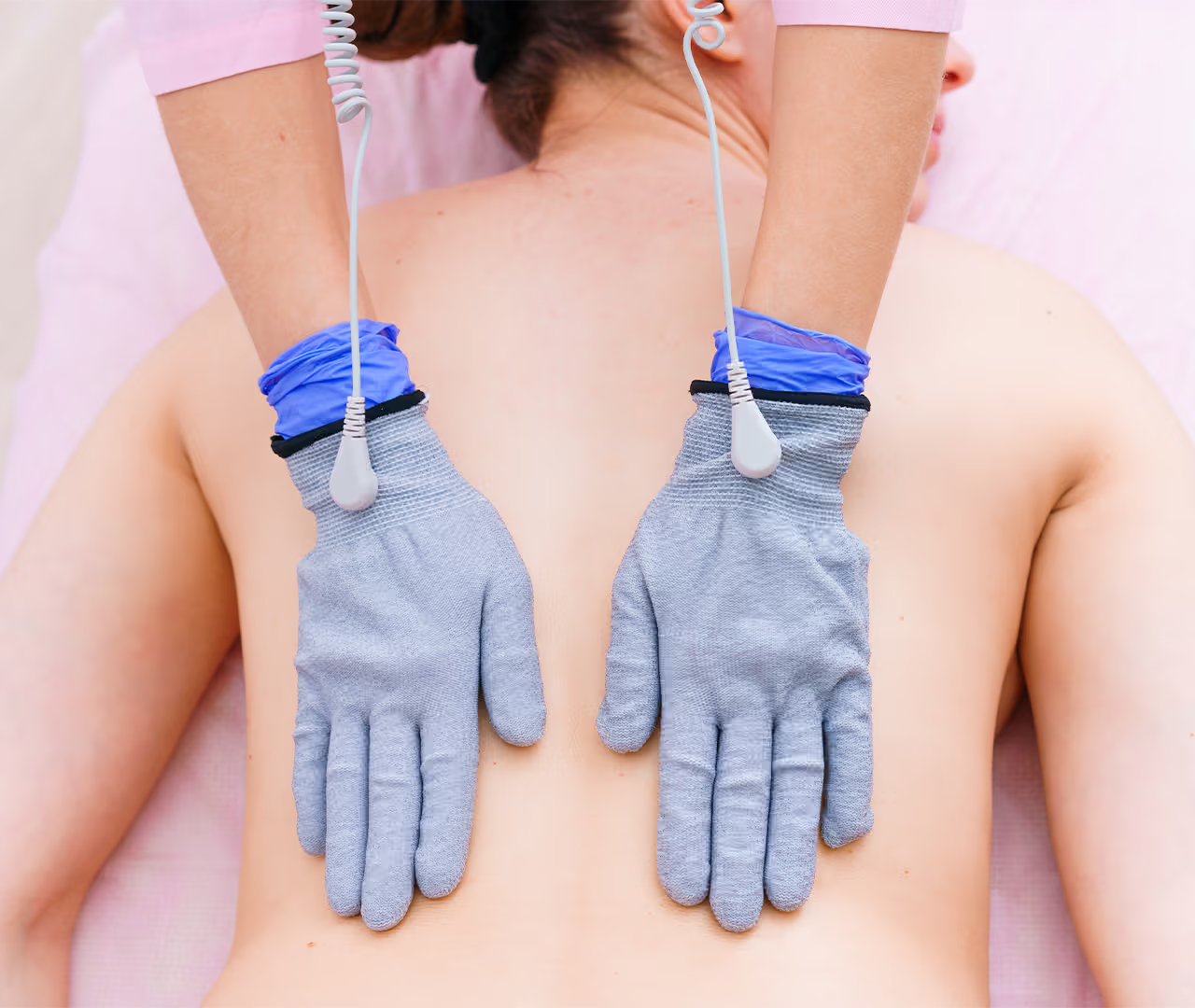
DDS + Laser Acupoint Therapy is a 90-minute session that combines DDS Bio-Current massage with needle-free, low-level laser applied to specific points on the body. At Flourish TCM Clinic in Yaletown, Vancouver, it costs $280 and is performed by Amir Norouzi, DDS Bio-Current Technician and Body Worker.
Body Wellness
TuiNa & DDS Acupressure Massage
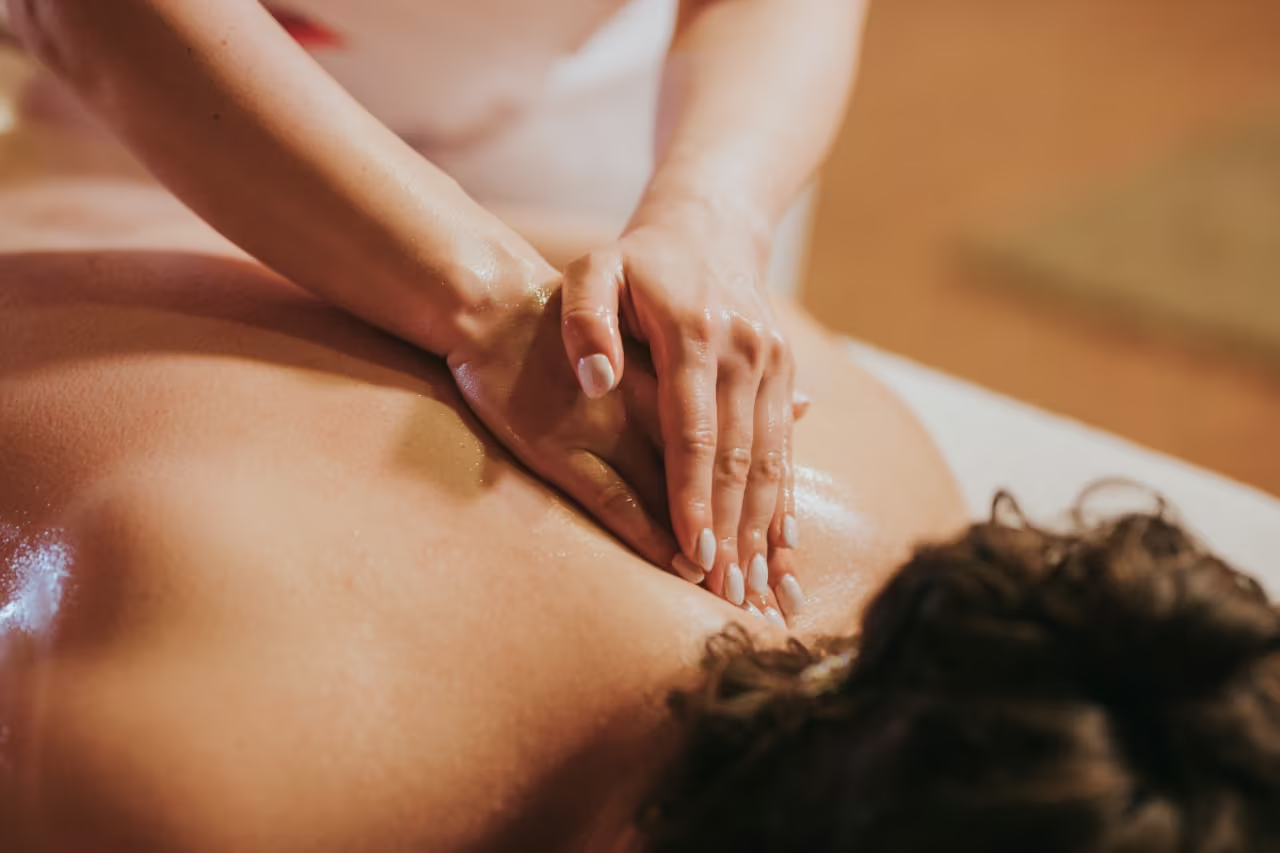
TuiNa & DDS Acupressure Massage combines TuiNa, a Chinese massage technique that works along the meridians and acupressure points, with the DDS Bio-Current system's gentle micro-current. At Flourish TCM Clinic in Yaletown, Vancouver, it's $110 for 30 minutes or $170 for 60 minutes, with Amir Norouzi.
Body Wellness
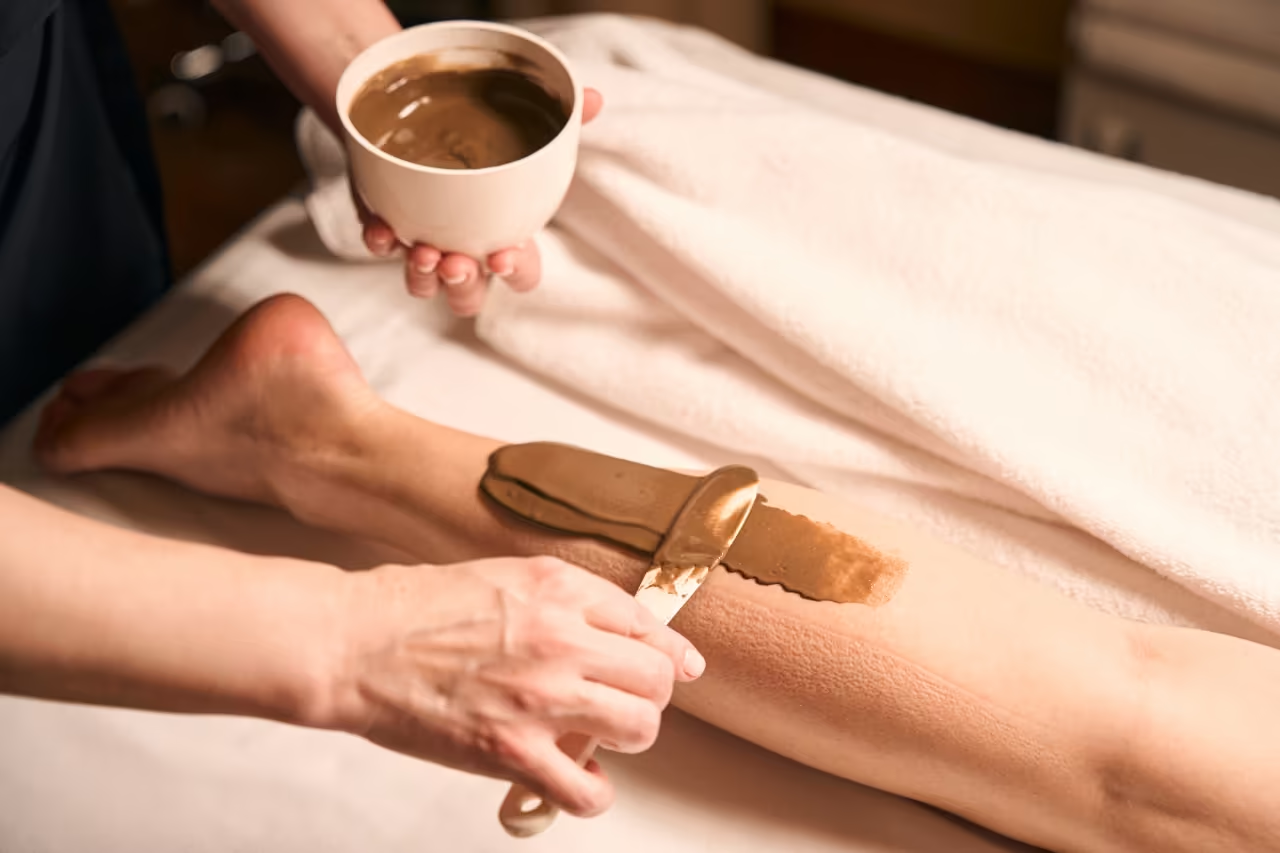
Chinese Medicine Mud Therapy
Chinese Medicine Mud Therapy applies a warm mineral mud, at body temperature, to areas of the body such as the back, shoulders or joints. At Flourish TCM Clinic in Yaletown, Vancouver, it's $150 for 30 minutes, or $260 for 90 minutes combined with DDS acupressure massage, with Amir Norouzi or Mehri Abedi.