Microneedling + LED: What to Expect, and Why People Choose It for Acne Scars
Before, during and after microneedling with LED: numbing, sensation, redness, aftercare and how many sessions acne scars usually need.

 Written byFlourish TCM ClinicTraditional Chinese Medicine & skin care · Yaletown, Vancouver
 Reviewed byTabasom (Tabi) Mirshahi, R.TCM.P., R.Ac.
Microneedling + LED: What to Expect, and Why People Choose It for Acne Scars
Microneedling with LED is a collagen-induction treatment: a pen with fine, sterile needles creates controlled micro-channels in the skin, prompting its natural repair, and LED light calms the skin afterwards. It's a common choice for acne scars and rough texture. Visible redness usually settles within 3 days, and changes build gradually over several sessions.
What is microneedling with LED?
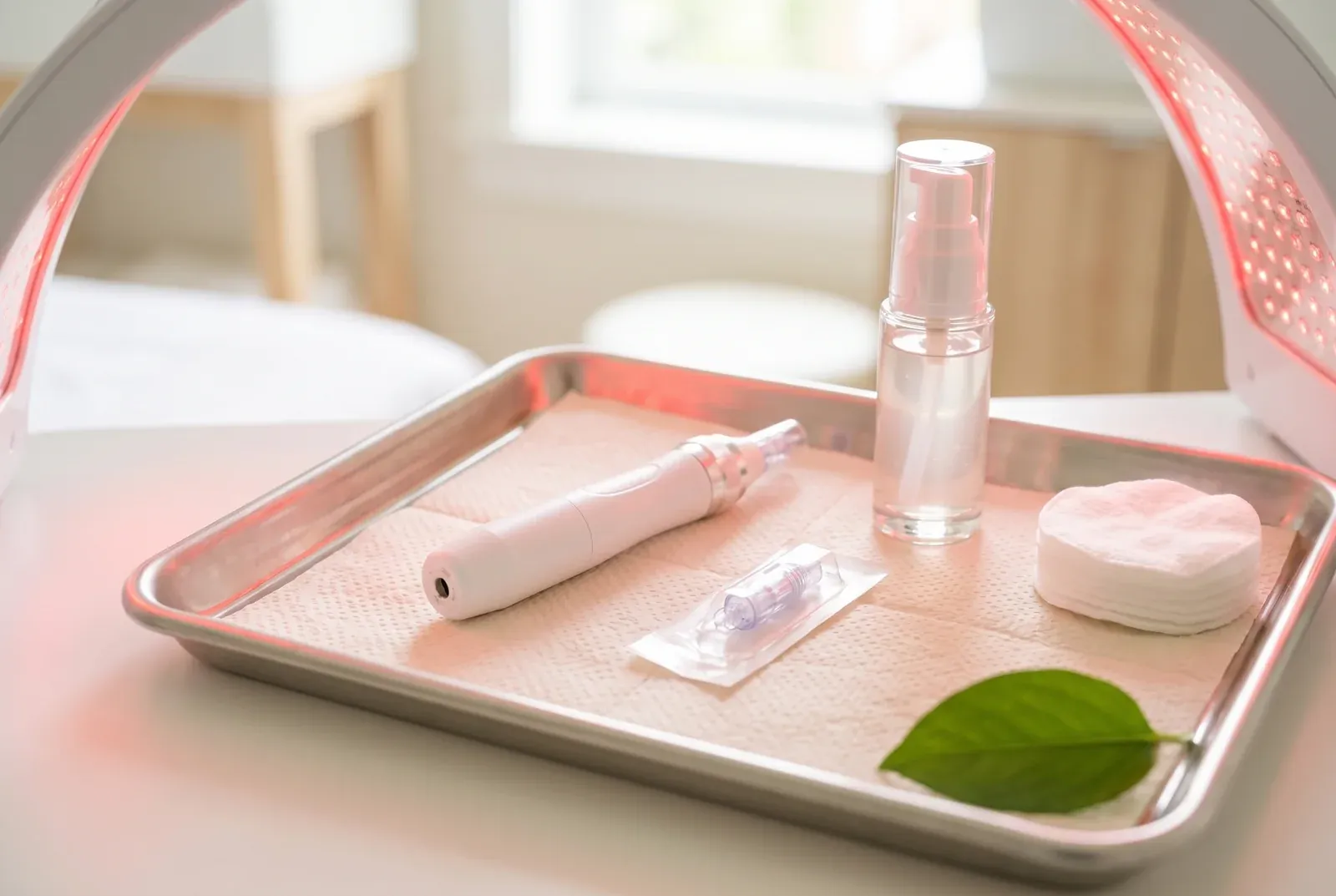
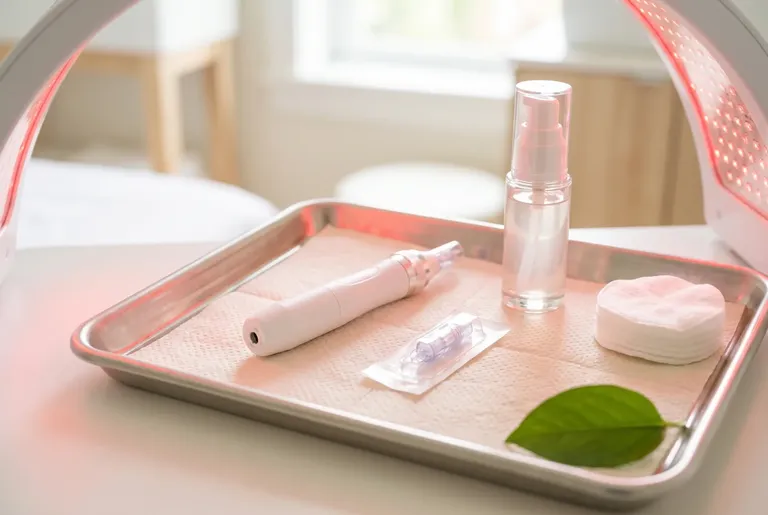
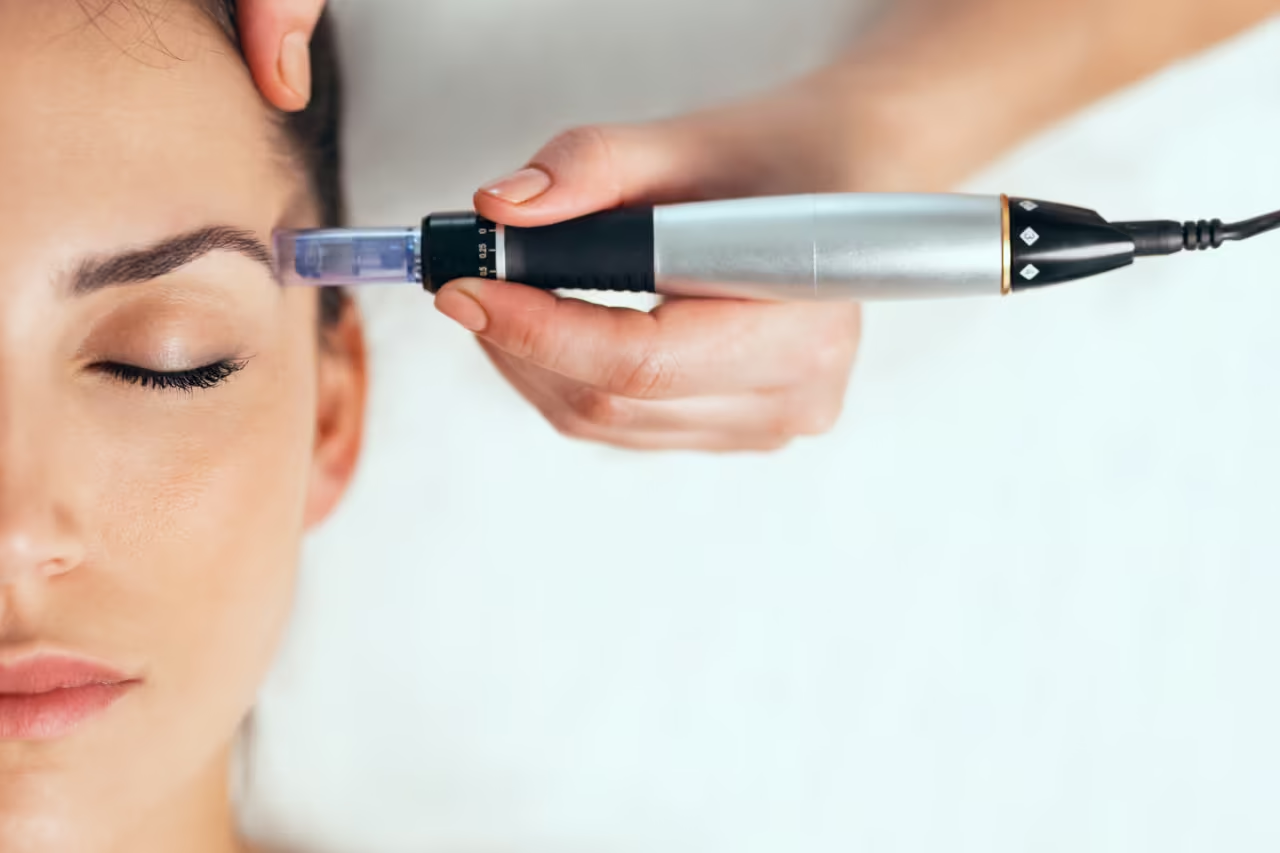
Microneedling, also called collagen induction therapy, uses a handheld pen fitted with a sterile, single-use cartridge of very fine needles. As the pen moves across numbed skin, it creates thousands of tiny, controlled channels. The skin responds with its normal repair process, which includes producing new collagen and elastin over the following weeks.
At Flourish, every microneedling session ends with LED light therapy, used to calm the skin. Our session covers the face and neck in 120 minutes. See the Microneedling + LED page for details.
Why do people choose it for acne scars?
Acne scars form when deep breakouts damage the skin's collagen, leaving rolling, boxcar or icepick marks. Because microneedling prompts new collagen, it's widely used for the look of rolling and boxcar scars in particular. Deep icepick scars often need medical treatments too; a dermatologist can advise.
Flat red or brown marks left after a breakout aren't true scars. They often fade with time and daily SPF, and they may respond to other treatments such as OxyGeneo.
Before: who's a candidate, and what should you stop?
Microneedling suits most skin types. It isn't done:
- over active, inflamed acne, cold sores or skin infection;
- during pregnancy or breastfeeding;
- within six months of taking isotretinoin (Accutane);
- if you have a bleeding disorder or take blood thinners (discuss first);
- if you tend to form keloid scars.
Stop retinoids and strong acids a few days before (your practitioner will confirm), and avoid sunburn in the week before.
During: numbing, sensation and time
- A consultation and a check of your medications and recent treatments.
- Cleansing, then numbing cream for 15–20 minutes.
- Microneedling across the face and neck. Most people feel vibration or light scratching.
- A calming serum.
- LED light, which is warm and relaxing.
- Aftercare instructions and SPF.
After: the aftercare Mina explains
- Visible redness, like a mild sunburn, usually settles within 3 days.
- Don't wash your face until the next morning; then use gentle skincare.
- No makeup or powder for 48 hours.
- No exercise, sauna, swimming or outdoor sports for 3–5 days.
- Avoid direct sun for 7–10 days (a hat and large sunglasses help), and wear SPF 50+ every day.
- No solarium or tanning beds for 15 days, and no Botox or fillers for 3 weeks.
- Don't touch or rub the area. Some light flaking is normal; don't pick.
Mina explains all of this after your session, and we email you the clinic's aftercare guide (a PDF). Our full guide: Aftercare After Microneedling: The First 72 Hours.
When do changes show?
Some people see a brighter look within a week. Changes in texture and scarring build over the following weeks and months as new collagen forms. Results vary by scar type and skin.
How many sessions do acne scars usually need?
Most people book a series of at least three. At Flourish, microneedling is done 4–5 times a year, so sessions are spaced well apart. We offer a three-session series and combined series that alternate microneedling with OxyGeneo. See Skin Rejuvenation Options Compared.
A TCM note on skin repair
In Traditional Chinese Medicine, skin that is slow to recover is linked to stagnation of Qi and blood. If your skin is inflamed or reactive, your practitioner may suggest calming it first, with gentler facials, before starting microneedling.
Where to book
Microneedling is performed by Mina at our Yaletown clinic. Clients from the West End and Downtown often book on a weekend so the redness settles before work.
Frequently asked questions
Does microneedling hurt?
Numbing cream is applied first, so most people feel vibration or light scratching.
Can you microneedle active acne?
Not over inflamed breakouts; those are calmed first.
Will microneedling remove my scars?
It aims to improve their appearance; complete removal usually isn't realistic.
Why LED afterwards?
To calm the skin as it settles.
Is it covered by insurance?
No.
Sources
- Alster TS, Graham PM. Microneedling: a review and practical guide. Dermatol Surg. 2018. (pubmed.ncbi.nlm.nih.gov)
- Jacob CI, et al. Acne scarring: a classification system and review of treatment options. J Am Acad Dermatol. 2001. (pubmed.ncbi.nlm.nih.gov)
- Batool A, et al. Comparing fractional CO2 laser and needling-based modalities in facial acne scar treatment: a systematic review and meta-analysis. Lasers Med Sci. 2026. (pmc.ncbi.nlm.nih.gov)
- Agu-Jefferson I, et al. Microneedling versus chemical peels for atrophic acne scars: a systematic review and meta-analysis. Cureus. 2026. (pmc.ncbi.nlm.nih.gov)
Information on this site is general and isn't a substitute for advice from your physician.
Related to this article
Skin Care & Facials
Microneedling + LED
Microneedling + LED is a collagen-induction treatment that uses a fine-needle pen to create controlled micro-channels, followed by calming LED light. At Flourish TCM Clinic in Yaletown, Vancouver, the face and neck treatment is 120 minutes, $330, performed by Mina Gharnian, Skin Care Practitioner.
Skin Care & Facials
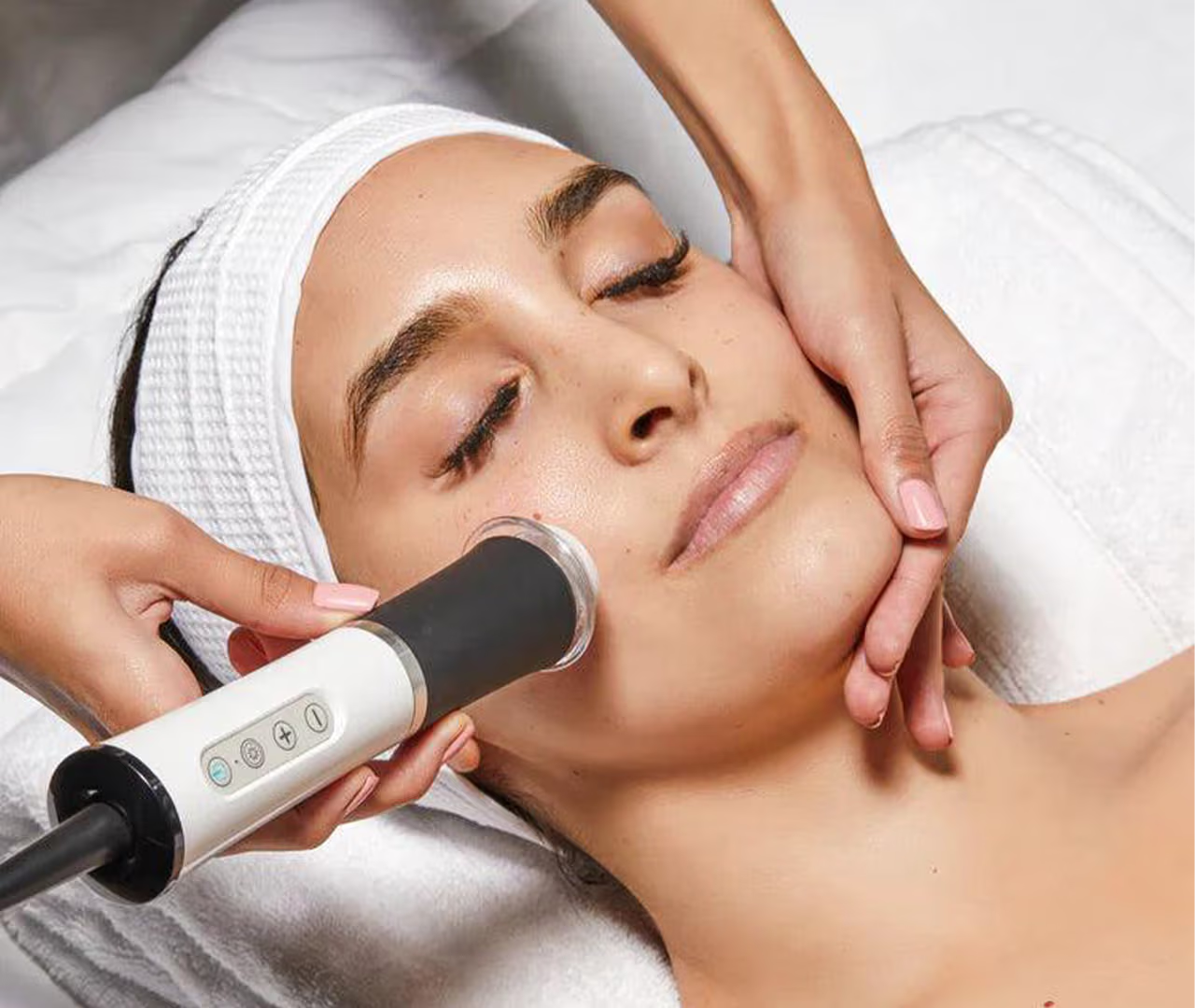
OxyGeneo Facial
The OxyGeneo Facial is a 90-minute treatment that exfoliates, infuses and oxygenates the skin in a single pass using the OxyGeneo system. At Flourish TCM Clinic in Yaletown, Vancouver, it starts at $230 and is performed by Mina Gharnian, Skin Care Practitioner.
Skin Care & Facials
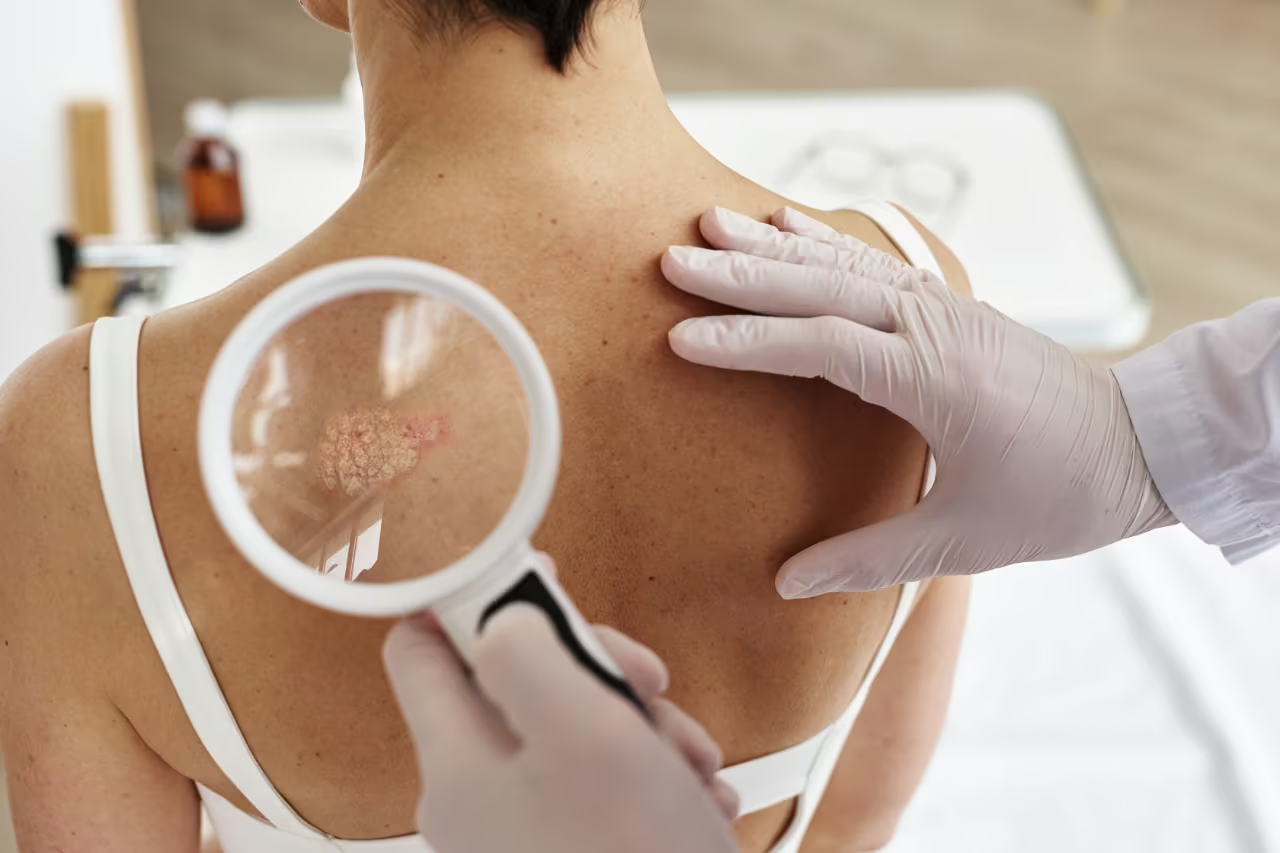
Back Acne Treatment
The Back Acne Treatment is a clinical facial for the back, shoulders and upper arms that deep-cleanses, exfoliates and calms the skin. At Flourish TCM Clinic in Yaletown, Vancouver, the upper back is 90 minutes for $250 and the whole back is 120 minutes for $350, with Mina Gharnian, Skin Care Practitioner.