Hair Thinning: Common Causes and Non-Surgical Options
Common causes of thinning hair, which need a doctor, an overview of non-surgical options, and realistic timelines for any treatment.

 Written byFlourish TCM ClinicTraditional Chinese Medicine & skin care · Yaletown, Vancouver
 Reviewed byTabasom (Tabi) Mirshahi, R.Ac., R.TCM.P.
Hair Thinning: Common Causes and Non-Surgical Options
Hair thinning has many causes: genetics (pattern hair loss), hormonal changes, stress or illness, iron or thyroid problems, and some medications. Because some causes are medical and treatable, it's worth seeing a doctor first, especially for sudden or patchy loss. Non-surgical options range from medications to scalp treatments, and any change takes months because hair grows slowly.
Common causes of thinning hair
| Cause | What it looks like |
|---|---|
| Pattern hair loss (androgenetic alopecia) | Gradual thinning at the crown or part in women; receding hairline or crown in men |
| Telogen effluvium | Diffuse shedding 2–4 months after stress, illness, surgery, childbirth or a crash diet |
| Alopecia areata | Round, smooth bald patches (autoimmune) |
| Iron deficiency, thyroid problems | Diffuse thinning, often with fatigue |
| Medications | Shedding that starts after a new medication |
| Traction | Thinning where hair is pulled tight (tight ponytails, extensions) |
Which causes need a doctor?
See a doctor before any cosmetic treatment if your hair loss:
- is sudden, rapid or patchy;
- comes with an itchy, scaly, red or painful scalp;
- comes with fatigue, weight change or irregular periods;
- started after a new medication.
Blood tests, such as iron and thyroid, can find treatable causes. A dermatologist can diagnose the type of hair loss.
An overview of non-surgical options
- Topical medication: minoxidil, available over the counter; ask your pharmacist or doctor.
- Prescription options your doctor may discuss, depending on type and sex.
- Low-level light therapy: some clinical evidence for certain types of pattern hair loss.
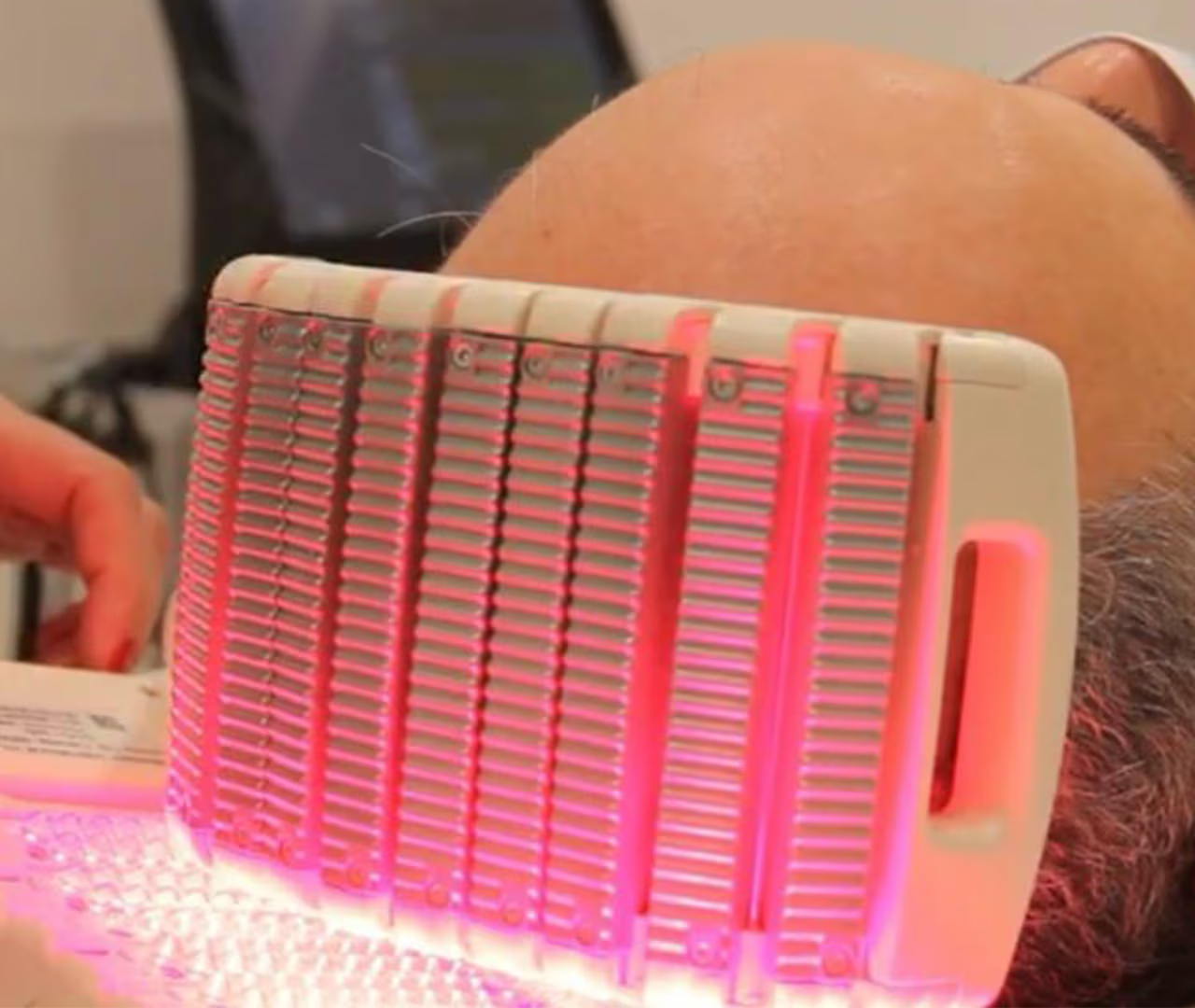
- In-clinic scalp treatments designed to support the scalp environment, such as our Hair Loss Restoration.
- Treating the underlying cause, such as iron, thyroid or stress.
- Surgical options (hair transplant) for some pattern hair loss, performed by physicians.
Many people combine approaches. Keep your doctor informed.
What does our treatment involve?
Hair Loss Restoration at Flourish is a 30-minute non-surgical scalp treatment, usually booked as a weekly series of 10. It's designed to support the scalp as part of a longer-term plan. See What Happens During a Hair Loss Restoration Session. We can't promise regrowth, and results vary.
The TCM view
Traditional Chinese Medicine links healthy hair to well-nourished blood and the Kidney system. Thinning is associated with blood deficiency, stress, aging or depletion, such as after childbirth or illness. That's why TCM looks at sleep, stress and diet alongside the scalp.
Realistic timelines
Hair grows about 1 cm a month, and each hair cycles through growing, resting and shedding phases. Any treatment, medical or cosmetic, is judged over months, not weeks. Shedding after stress or childbirth often recovers on its own over several months.
Where to book
Hair Loss Restoration is available with Amir or Mehri at our Yaletown clinic. Short, 30-minute visits suit clients from the West End and Richmond. The team speaks English and Farsi.
Frequently asked questions
Can stress cause hair loss?
Yes. Shedding often starts 2–4 months after a stressful event and usually recovers.
Is hair thinning reversible?
It depends on the cause; some shedding recovers and pattern loss is ongoing.
Do women get pattern hair loss?
Yes. It often shows as a widening part.
Can I use minoxidil with your treatment?
Tell us what you use; keep your doctor informed.
How many sessions?
Usually a series of 10, once a week.
Sources
- American Academy of Dermatology — Hair loss: who gets and causes (18 causes) (aad.org)
- American Academy of Dermatology — Hair loss types (aad.org)
- Adil A, Godwin M. The effectiveness of treatments for androgenetic alopecia: a systematic review and meta-analysis. J Am Acad Dermatol. 2017. (pubmed.ncbi.nlm.nih.gov)
Information on this site is general and isn't a substitute for advice from your physician.
Related to this article
Cosmetic Treatments
Hair Loss Restoration
Hair Loss Restoration is a 30-minute, non-surgical scalp treatment designed to support the scalp environment for people with thinning hair, using a DDS bio-current scalp brush and red and infrared cold laser on scalp points. At Flourish TCM Clinic in Yaletown, Vancouver, it costs $150, with Amir Norouzi or Mehri Abedi.
Body Wellness
Acupuncture
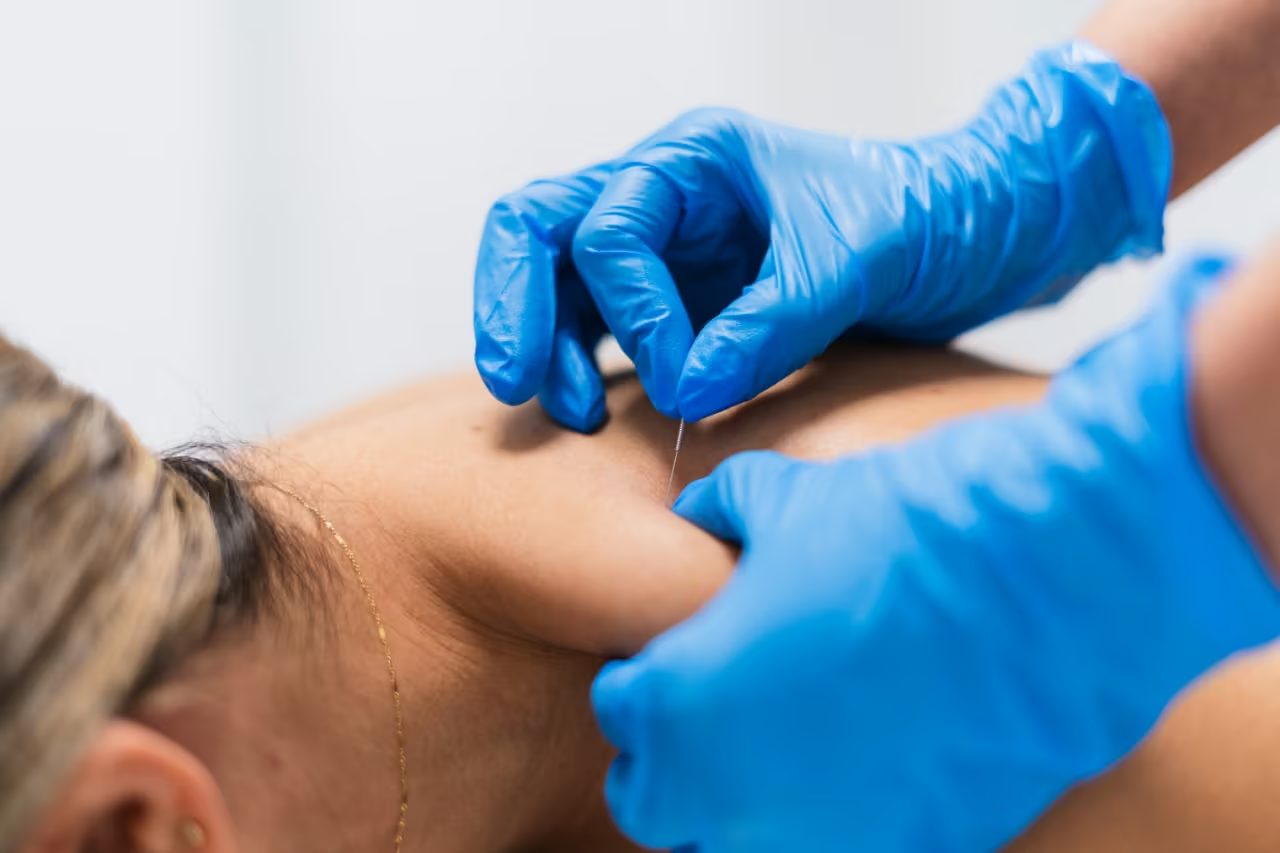
Acupuncture is a Traditional Chinese Medicine treatment in which a registered acupuncturist places fine, sterile needles at specific points on the body. At Flourish TCM Clinic in Yaletown, Vancouver, a 45-minute session costs $170. Appointments open once a registered acupuncturist joins our team; join the waitlist.
Body Wellness
Relaxation Massage
Relaxation Massage is a calming, Swedish-style full-body massage using long, flowing strokes to help you unwind. At Flourish TCM Clinic in Yaletown, Vancouver, it's $170 for 60 minutes or $250 for two hours, with Amir Norouzi. It is a relaxation service, not registered massage therapy.