Spider Veins: Causes, Prevention and Cosmetic Options
What spider veins are, why they appear, how to help prevent them, medical vs cosmetic options, and when leg veins need a doctor.

 Written byFlourish TCM ClinicTraditional Chinese Medicine & skin care · Yaletown, Vancouver
 Reviewed byTabasom (Tabi) Mirshahi, R.TCM.P., R.Ac.

Spider Veins: Causes, Prevention and Cosmetic Options
Spider veins are small, thin red, blue or purple veins just under the skin, most often on the legs and face. They're common, usually harmless, and linked to genetics, hormones and standing for long periods. Medical options include sclerotherapy and vascular lasers, performed by physicians. Non-invasive cosmetic treatments aim to reduce their appearance. Painful or bulging veins need a doctor.
What are spider veins?
Spider veins (telangiectasias) are tiny dilated blood vessels near the skin's surface, often in branching, web-like patterns. They differ from varicose veins, which are larger, raised, rope-like, and can ache or swell.
Why do they appear?
- Genetics: they often run in families.
- Hormones: pregnancy, birth control and menopause.
- Standing or sitting for long periods.
- Aging, as vein walls and skin thin.
- Pressure, such as weight gain or pregnancy.
Can you prevent them?
You can't fully prevent them, especially if they run in your family, but you can reduce the risk of new ones:
- Move regularly; take breaks from standing or sitting.
- Raise your legs at the end of the day.
- Consider compression stockings if you stand a lot (ask a pharmacist).
- Protect your face from the sun.
- Keep active to support circulation.
Medical vs cosmetic options
| Option | Who provides it | Notes |
|---|---|---|
| Sclerotherapy (injections) | Physicians | A common medical treatment for leg spider veins |
| Vascular laser | Physicians / medical clinics | Often used for facial spider veins |
| Non-invasive cosmetic treatment | Clinics like Flourish | Aims to reduce appearance; no injections |
At Flourish, our Spider Vein Treatment is a non-invasive, 45-minute cosmetic treatment with no injections (method on the treatment page). It aims to reduce the appearance of spider veins; results vary, and new veins can form over time. It isn't sclerotherapy or laser vein removal, and it isn't a treatment for varicose veins.
The TCM view
Traditional Chinese Medicine relates visible surface veins to blood stagnation. TCM advice includes regular movement, warmth and avoiding long periods of standing still.
When to see a doctor
See a doctor, not a cosmetic clinic, if veins are:
- painful, swollen, warm, red or hard;
- large, raised or bulging (possible varicose veins);
- accompanied by leg swelling, heaviness or aching;
- near skin that's discoloured, thickened or broken (possible ulcer).
Sudden pain and swelling in one leg can mean a blood clot and needs urgent care. See spider veins.
Where to book
Spider Vein Treatment is performed by Amir or Mehri at our Yaletown clinic, a short trip from Fairview and South Granville.
Frequently asked questions
Are spider veins dangerous?
Usually not; they're mostly cosmetic.
Will spider veins come back?
Treated veins may fade, but new ones can form over time.
Is your treatment the same as sclerotherapy?
No. It's non-invasive, with no injections.
Can you treat varicose veins?
No. Varicose veins need a medical assessment.
How many sessions?
It typically starts with a series of 10, once a week.
Sources
- Office on Women's Health (HHS) — Varicose veins and spider veins (womenshealth.gov)
- MedlinePlus — Varicose veins (medlineplus.gov)
- NHS — Deep vein thrombosis (DVT) (nhs.uk)
Information on this site is general and isn't a substitute for advice from your physician.
Related to this article
Cosmetic Treatments
Spider Vein Treatment
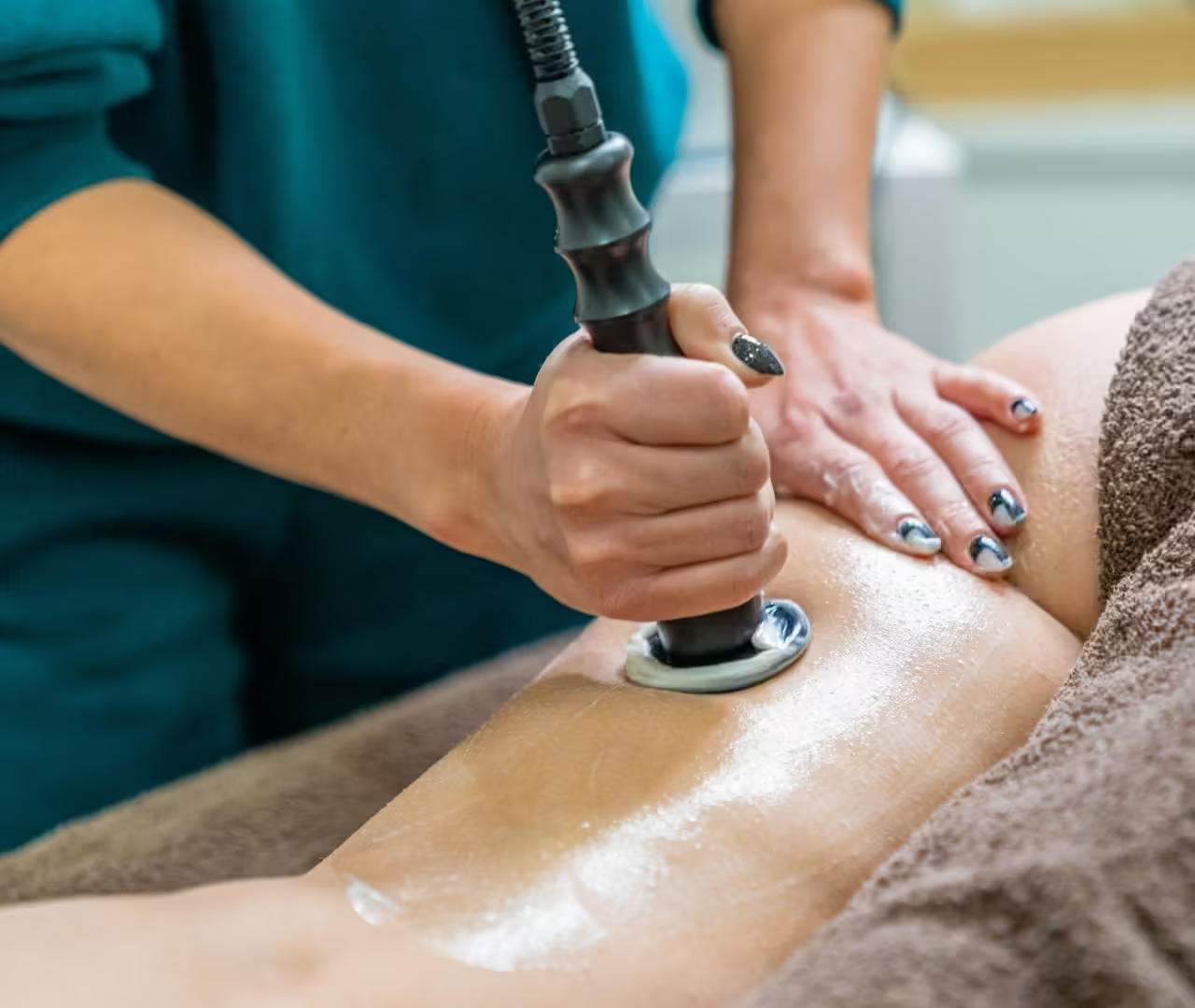
The Spider Vein Treatment is a 45-minute, non-invasive cosmetic treatment that uses DDS Bio-Current massage and aims to reduce the appearance of small surface spider veins. At Flourish TCM Clinic in Yaletown, Vancouver, it costs $170, with Amir Norouzi or Mehri Abedi. It does not involve injections.
Body Wellness
Lymphatic Drainage Massage
Lymphatic Drainage Massage is a gentle, rhythmic massage that uses directional strokes to support the flow of lymph fluid. People book it for swelling, puffiness and recovery after surgery, with their surgeon's clearance. At Flourish TCM Clinic in Yaletown, Vancouver, it's $170 for 60 minutes.