Cupping Marks: What They Are and How Long They Last
Why cupping leaves circular marks, whether they're bruises, how long they last, and how to plan around events.

 Written byFlourish TCM ClinicTraditional Chinese Medicine & skin care · Yaletown, Vancouver
 Reviewed byTabasom (Tabi) Mirshahi, R.Ac., R.TCM.P.
Cupping Marks: What They Are and How Long They Last
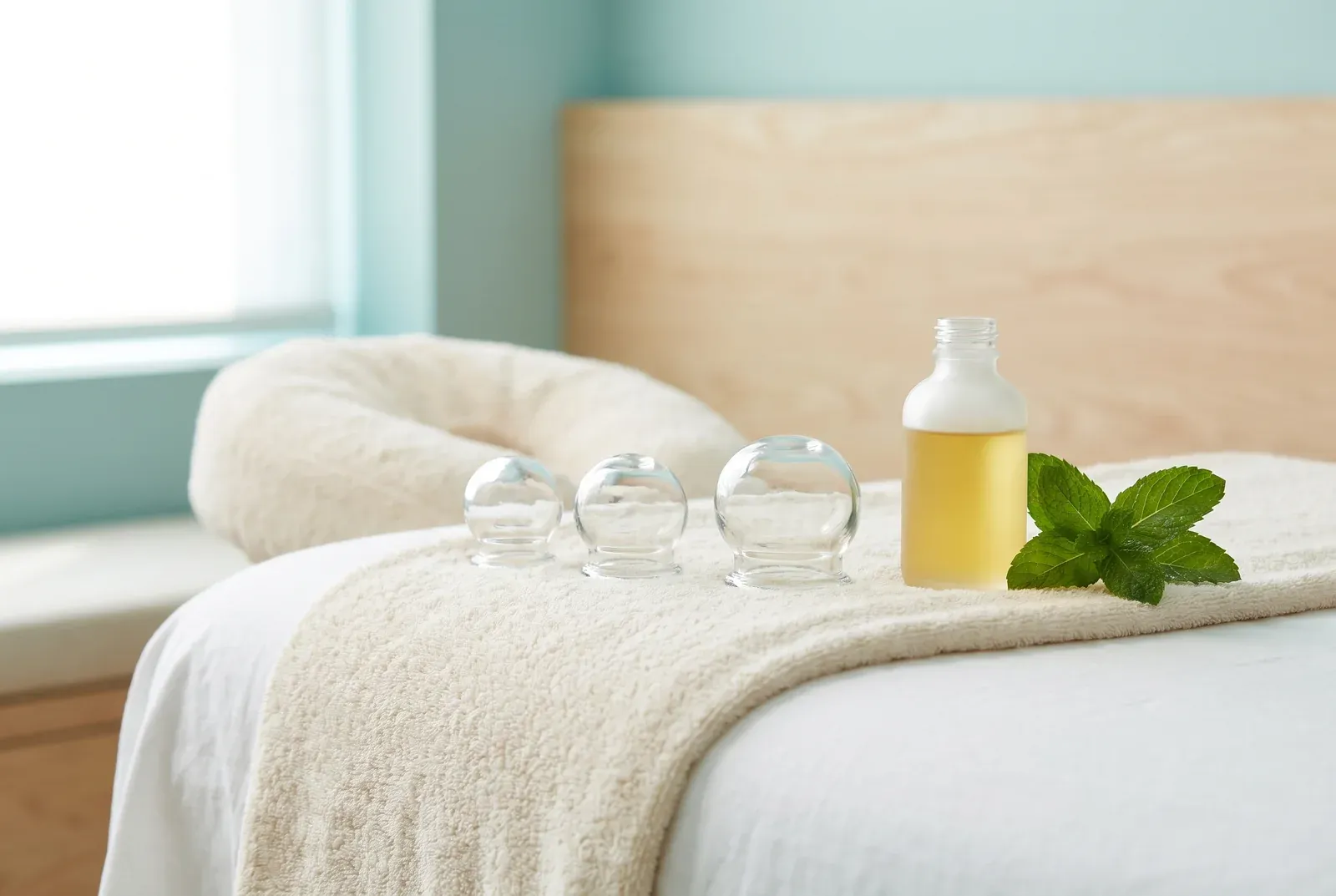
Cupping marks are circular patches of red, pink or purple left where suction cups drew blood toward the skin's surface. They aren't bruises from impact, and they're usually not sore to touch. Most fade within about 48 hours. If you have an event where they'd show, book cupping at least a week ahead.
What causes cupping marks?
Cupping uses suction to lift the skin and underlying tissue into a cup. The suction pulls blood from tiny vessels close to the surface into the surrounding tissue, which shows as a circular mark. The stronger the suction and the longer the cup stays on, the more likely a mark.
Are cupping marks bruises?
Not in the usual sense. A bruise comes from blunt impact that damages tissue. Cupping marks come from suction and usually aren't sore to touch, although the area can feel a bit tender, like after a firm massage. They look like bruises, which is why people often mistake them for one.
How long do cupping marks last?
Most fade within about 48 hours. Lighter pink marks go faster; deeper purple ones can take longer. Gliding cupping, where cups move over oiled skin, often leaves lighter, streakier marks than cups left in place.
Do the colours mean anything?
In TCM, practitioners sometimes interpret mark colour: darker marks are traditionally linked to more "stagnation," and lighter marks to less. From a Western perspective, colour mostly reflects suction strength, time and your skin and blood vessels. We mention the tradition without treating mark colour as a diagnosis.
Planning around events
- If marks would show (a wedding, beach day, photoshoot, or a backless dress), book cupping at least a week before.
- Ask for lighter suction or gliding cupping if you want fewer marks.
- Marks on the back are easy to cover with a shirt.
Aftercare after cupping
Keep the area warm and covered, drink water, and avoid hot tubs, saunas and very cold showers for the rest of the day. Some people feel a little tired or relaxed afterwards.
Who shouldn't have cupping?
Cupping isn't suitable over broken, sunburned or inflamed skin, or over varicose veins. It needs care if you take blood thinners or have a bleeding disorder, and the abdomen and lower back are avoided during pregnancy.
Cupping at Flourish
- Cupping Therapy for tight muscles and stress is currently on the waitlist.
- Cupping Butt Lift, a cosmetic cupping treatment, is bookable. Any change in appearance is temporary, and marks are common.
- Sore, tight muscles? TuiNa & DDS Acupressure Massage is bookable now and doesn't leave marks.
Our clinic is in Yaletown. Active clients often come by bike from Kitsilano along the seawall, or by Canada Line from Richmond.
Frequently asked questions
Do cupping marks hurt?
Usually not, though the area may feel tender, like after a firm massage.
Can I avoid marks entirely?
Lighter suction and gliding cupping reduce them, but some marking is common.
Can I exercise after cupping?
Light activity is fine; avoid very intense workouts that day.
Is dark colour a sign something's wrong?
It mostly reflects suction strength and your skin; tell your practitioner if a mark is painful or doesn't fade.
Can I book cupping now?
Cosmetic cupping is bookable; Cupping Therapy is on a waitlist.
Sources
- Lowe DT. Cupping therapy: an analysis of the effects of suction on skin and the possible influence on human health. Complement Ther Clin Pract. 2017. (pubmed.ncbi.nlm.nih.gov)
- National Center for Complementary and Integrative Health (NIH) — Cupping (nccih.nih.gov)
Information on this site is general and isn't a substitute for advice from your physician.
Related to this article
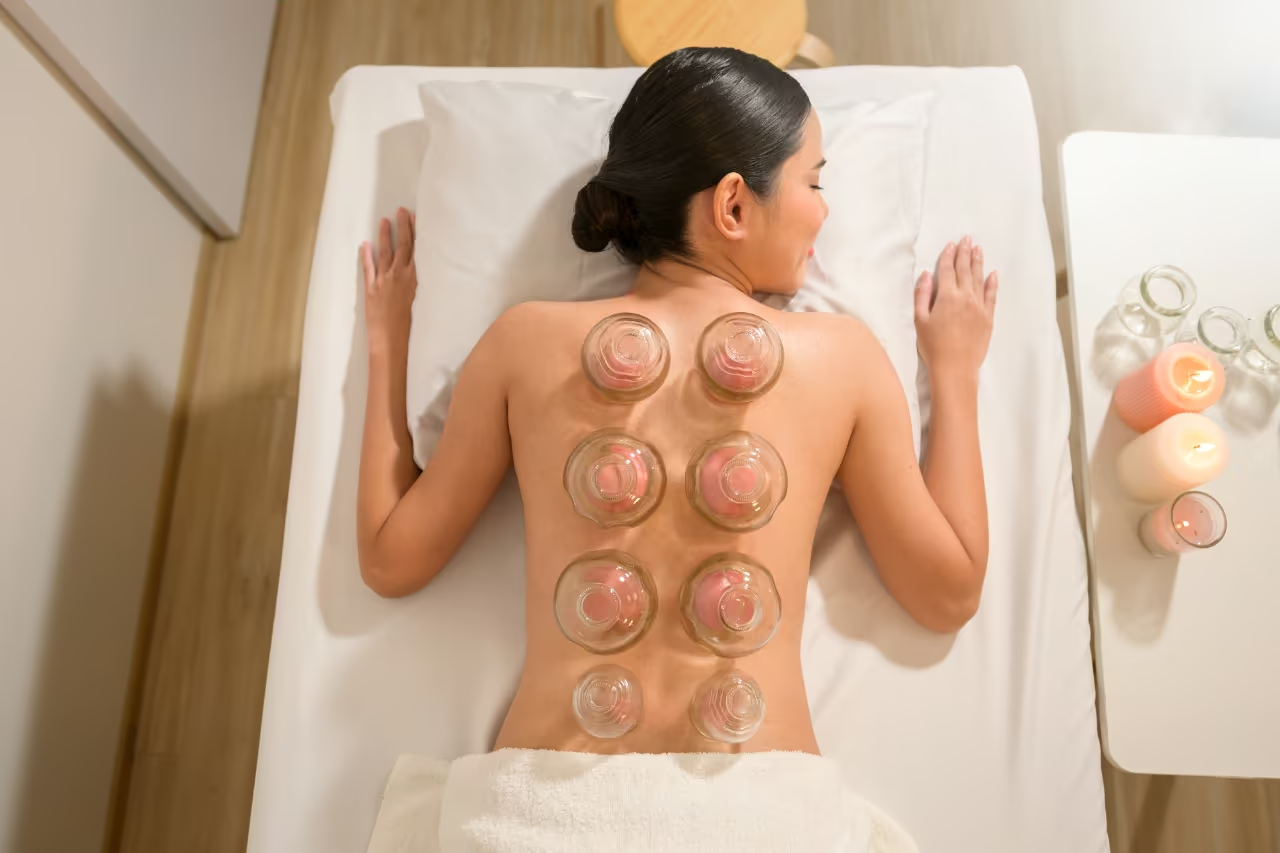
Body Wellness
Cupping Therapy
Cupping Therapy is a 30-minute Traditional Chinese Medicine treatment in which vacuum cups are applied over massage oil, to ease muscle tension and help you relax. At Flourish TCM Clinic in Yaletown, Vancouver, it costs $170. Appointments open once a registered acupuncturist joins our team.
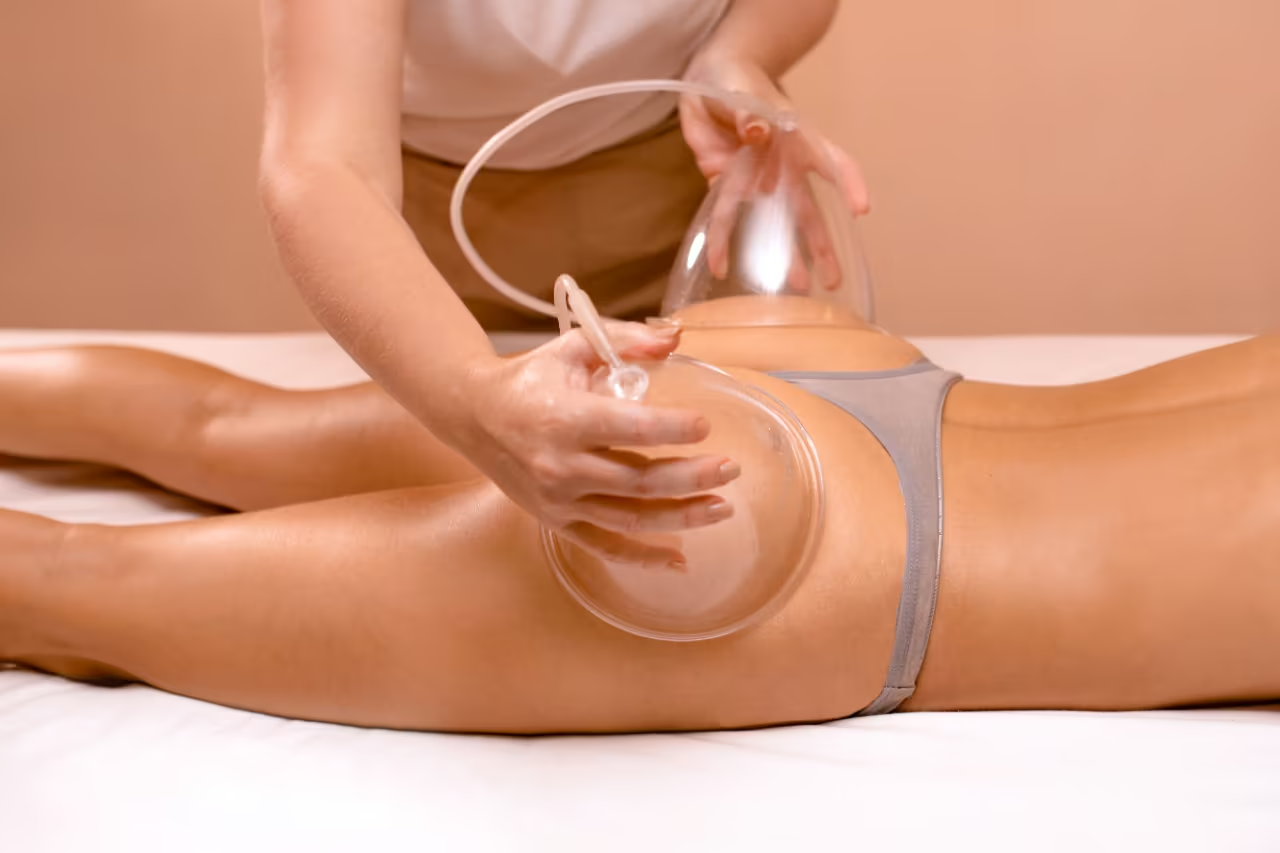
Cosmetic Treatments
Cupping Butt Lift
The Cupping Butt Lift is a 20-minute cosmetic treatment in which vacuum cups are held on, or glided over, the buttocks with massage oil. At Flourish TCM Clinic in Yaletown, Vancouver, it costs $150, or $1,000 for a series of 10, with Amir Norouzi or Mehri Abedi.
Body Wellness
TuiNa & DDS Acupressure Massage
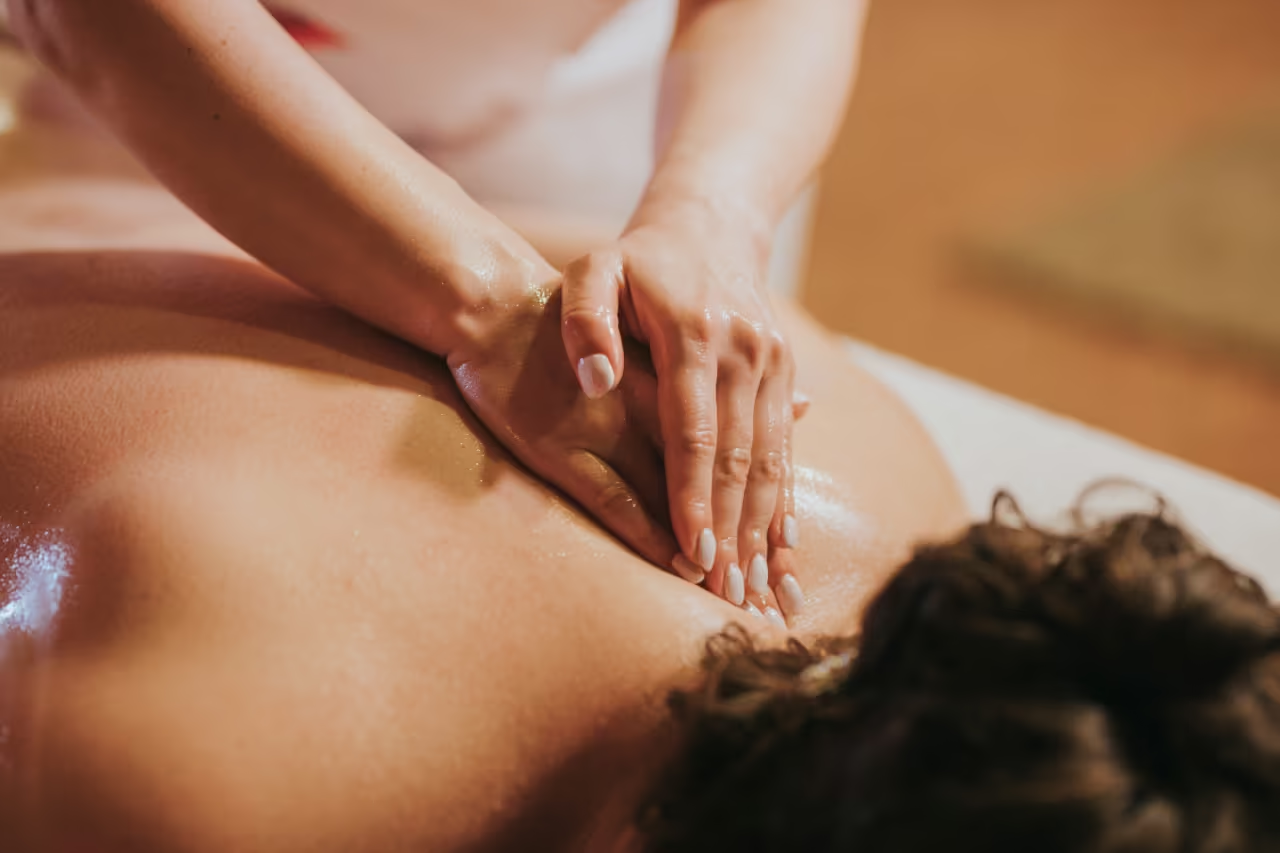
TuiNa & DDS Acupressure Massage combines TuiNa, a Chinese massage technique that works along the meridians and acupressure points, with the DDS bio-current system's gentle micro-current. At Flourish TCM Clinic in Yaletown, Vancouver, it's $110 for 30 minutes or $170 for 60 minutes, with Amir Norouzi.